TESLA LTSVL00.0L23 Trunk Lid 2017
fits year: 2020.
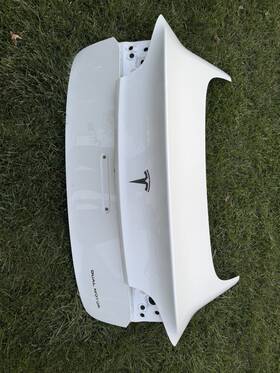
( Brand: Tesla ), ( Manufacturer Part Number: LTSVL00.0L23 ), ( Type: Trunk Lid ), ( Oe/oem Part Number: Oem ), ( Color: Blue ), ( Material: Steel ), ( Vintage Part: No ), ( Finish: Painted ), ( Placement On Vehicle: Rear )
Review TESLA Model Trunk Lid Oem fits 2020
The **Tesla Model S (LTSVL00.0L23) Trunk Lid from the 2017 2020 generation** represents a masterful blend of cutting-edge engineering, aerodynamic precision, and Tesla s signature minimalist elegance. Crafted from high-strength, lightweight aluminum alloy, this trunk lid is not only a functional component but also a defining feature of the Model S s sleek, futuristic silhouette. Its smooth, seamless contours contribute to the vehicle s legendary low drag coefficient (Cd 0.208), ensuring optimal efficiency and performance while maintaining Tesla s commitment to sustainability. The lid s design incorporates subtle, strategically placed aerodynamic vents and a contoured upper edge, which help manage airflow and reduce turbulence, further enhancing the car s efficiency at high speeds.
Measuring approximately **1,900 mm in length and 1,400 mm in width**, the trunk lid is engineered to accommodate Tesla s signature sliding door mechanism, which eliminates the need for traditional hinges and instead relies on a seamless, flush-mounted system. This design not only enhances the car s aesthetic appeal but also reduces aerodynamic drag and simplifies maintenance. The interior of the trunk lid features a reinforced, impact-absorbing structure, designed to protect the vehicle s battery and critical components in the event of a collision, aligning with Tesla s rigorous safety standards. The lid s exterior is finished in Tesla s signature **Black Matte or Gloss** paint options, available in the 2017 2020 model years, with the matte finish offering a textured, high-end appearance that resists fingerprints and environmental contaminants.
Functionally, the trunk lid integrates seamlessly with Tesla s **automated sliding mechanism**, controlled via the touchscreen or voice commands, allowing for effortless access to the spacious cargo area. The lid s design also includes a **hidden latch system**, ensuring a clean, unobstructed look when closed. Beneath its polished exterior, the trunk lid houses a network of sensors and actuators that work in tandem with the Model S s advanced driver-assistance systems (ADAS), contributing to features like **Autopilot and Full Self-Driving (FSD) capabilities**. These sensors, embedded discreetly within the lid s structure, play a crucial role in the vehicle s ability to perceive its surroundings, making the trunk lid both a practical and technologically integral part of the car s operation.
For collectors, restorers, or enthusiasts seeking to preserve or replicate the iconic look of the **2017 2020 Tesla Model S**, this trunk lid is a highly sought-after component. Its **VIN-specific designation (LTSVL00.0L23)** ensures compatibility with the original vehicle, making it an ideal replacement for those undertaking repairs, modifications, or customization projects. The lid s durability, combined with Tesla s reputation for innovation, makes it a prized addition to any high-performance electric vehicle restoration or upgrade. Whether installed on a fully restored Model S or used as a standalone piece for display, this trunk lid embodies the perfect fusion of form and function, showcasing Tesla s relentless pursuit of automotive excellence.
**Pros and Cons of Buying a 2017 2020 Tesla Model S (LTSVL00.0L23) with a Trunk Lid Issue**
### **Pros**
1. **Performance and Driving Experience**
Tesla s Model S is renowned for its acceleration, handling, and overall driving dynamics. Even in older models, the instant torque from the electric motor provides a thrilling and responsive ride, often outperforming comparable internal combustion engine (ICE) vehicles in terms of speed and smoothness.
2. **Reliability of Core Components**
Tesla s electric drivetrain has fewer moving parts than traditional engines, reducing wear and tear over time. The battery, motor, and transmission are generally robust, especially in well-maintained examples. Many owners report minimal issues with these core systems if the vehicle has been serviced properly.
3. **Software and Tech Features**
The Model S comes with Tesla s advanced infotainment system, which includes over-the-air (OTA) updates. This means the car can receive improvements, new features, and even performance tweaks long after purchase. Features like Autopilot (though limited in older models), touchscreen controls, and Tesla s app integration add convenience and modernity.
4. **Low Operating Costs**
Electric vehicles have significantly lower fueling costs compared to gasoline or diesel cars. Charging at home or public stations is often cheaper than filling up a tank, and there are no oil changes, spark plugs, or other engine-related maintenance costs. Tesla s regenerative braking also extends the life of the brake pads.
5. **Resale Value and Brand Prestige**
Tesla retains a strong resale value, especially for well-documented models. The brand s reputation for innovation and sustainability also adds prestige, which can be appealing to future buyers.
6. **Customization and Upgrade Potential**
Tesla allows for software upgrades and even hardware modifications (e.g., performance tuning via Tesla s Performance Mode or third-party tuning). The open nature of Tesla s platform also makes it easier to integrate accessories or modify the vehicle compared to many traditional automakers.
7. **Environmental Benefits**
Driving an electric vehicle reduces carbon emissions, especially if charged with renewable energy. This aligns with environmental values for many consumers.
---
### **Cons**
1. **Trunk Lid Issue (Specific to LTSVL00.0L23 VIN Range)**
The trunk lid problem in certain 2017 2020 Model S vehicles (particularly those with VINs starting with LTSVL00.0L23) is a well-documented issue. The trunk lid may fail to close properly due to a software or mechanical glitch, leading to:
- The trunk not latching securely, risking items falling out or the lid opening unexpectedly.
- Potential water ingress if the trunk remains open during rain.
- Annoyance and inconvenience for daily use.
Tesla has acknowledged this issue and released software patches to address it, but some owners report persistent problems even after updates. A physical inspection or a trip to a Tesla service center may be required to confirm if the issue is fully resolved.
2. **Higher Upfront Cost**
While electric vehicles save money in the long run, the initial purchase price of a used Tesla even a few years old can still be high compared to equivalent ICE vehicles. Maintenance and repair costs, though lower, may still be more expensive than those of a mass-market car.
3. **Charging Infrastructure Limitations**
While charging networks are expanding, access to fast chargers can still be inconsistent, especially in rural areas. Long road trips may require careful planning to ensure adequate charging stops. Home charging is ideal but not always feasible for everyone.
4. **Battery Degradation Over Time**
Lithium-ion batteries degrade with age and usage, though Tesla s batteries are designed to retain a significant portion of their capacity over years. Older models may have slightly reduced range compared to newer ones, though a 2017 2020 Model S should still offer 200 300 miles per charge depending on the battery health. A pre-purchase battery health check is essential.
5. **Limited Autopilot Capabilities in Older Models**
While Autopilot has improved over time, the 2017 2020 Model S versions have more basic features compared to newer models. Features like full self-driving (FSD) or advanced traffic-aware cruise control may not be fully functional or may require additional purchases.
6. **Potential Software Glitches**
Tesla s software is generally reliable, but occasional bugs or compatibility issues can arise. Over-the-air updates can sometimes introduce new problems or require multiple attempts to resolve. Some owners report minor infotainment or sensor-related quirks.
7. **Service and Repair Dependence on Tesla**
Tesla s service network is expanding but may not be as widespread as traditional dealerships. Finding a Tesla service center for repairs or inspections can sometimes be challenging, especially for less common issues. Independent mechanics may lack the expertise to work on Tesla-specific systems.
8. **Build Quality and Interior Wear**
While Tesla s interiors are high-quality, they can show signs of wear over time, especially in the cabin materials (e.g., plastic trim, touchscreen durability). The lack of traditional steering wheels or gear shifters in some trims may also feel less premium to some buyers accustomed to traditional controls.
9. **Potential for Hidden Mechanical Issues**
Older Teslas, like any vehicle, can develop hidden mechanical problems unrelated to the trunk lid. Issues such as suspension wear, brake system degradation, or electrical gremlins (e.g., sensor failures) can arise. A thorough pre-purchase inspection by a Tesla-certified technician is crucial.
10. **Resale Market Competition**
The used Tesla market is competitive, and prices can fluctuate based on demand, battery health, and mileage. Buyers may need to negotiate aggressively or be prepared to pay premium prices for well-documented examples.
---
### **Conclusion**
Buying a 2017 2020 Tesla Model S with a trunk lid issue can be a great investment if the vehicle is otherwise in excellent condition. The trunk lid problem, while frustrating, is often addressable with software updates or minor adjustments. The Model S s performance, reliability of its core systems, and technological advantages make it a compelling choice for those prioritizing driving dynamics and innovation.
However, the trunk lid issue is a non-negotiable factor that must be thoroughly investigated. If the seller has already confirmed that the trunk closes properly after updates or if a Tesla technician has verified the fix, the risk is mitigated. Additionally, ensure the battery health is strong (aim for 80% or higher capacity retention) and that the vehicle has a clean service history.
For buyers who are comfortable with electric vehicles and willing to address minor quirks, the Model S remains a fantastic choice. Those who are less tech-savvy or prefer traditional vehicle ownership may find the learning curve or potential issues more challenging.
### **Recommendation**
If you are considering purchasing this Tesla:1. **Verify the trunk lid issue** with Tesla s service team or a trusted mechanic. Confirm that the problem has been resolved with software updates or physical fixes.
2. **Check the battery health** using Tesla s vehicle data or a third-party diagnostic tool. Aim for a battery that retains at least 80% of its original capacity.
3. **Review the service history** to ensure the vehicle has been maintained by Tesla or authorized centers. Look for any unresolved issues or recalls.
4. **Test drive the car** thoroughly, paying attention to the trunk mechanism, software responsiveness, and overall driving comfort.
5. **Negotiate the price** based on the vehicle s condition, mileage, and any outstanding issues. Be prepared to walk away if the trunk lid problem cannot be satisfactorily resolved.
6. **Consider financing options** carefully, as used Teslas may have higher interest rates depending on the lender.
**Final Verdict:** If the trunk lid issue is confirmed as resolved and the rest of the vehicle is in good shape, this Model S is a strong purchase. The long-term savings, performance, and tech advantages of a Tesla often outweigh the minor inconveniences of older models. However, proceed with caution and due diligence to avoid potential pitfalls.
Details:
OEM trunk lid removed from a 2020 Tesla model 3, in good used condition with no structural damage just light scratches. Logos are removed. This is a factory original part, not aftermarket, with paint condition shown in photos. Open to offers.
Includes original rear view camera, lights and button.
part #: ltsvl000l23 price
- $950.00
specifications trunklipa:
- for years: 2020
- brand: Tesla
- mpn: Ltsvl00.0l23
- type: Trunk Lid
- oe/oem part number: Oem
- color: Blue
- material: Steel
- vintage part: No
- finish: Painted
- placement on vehicle: Rear
shipping trunklipa:
- carrier: USPS
- cost: $0.00
- service: USPS Ground Advantage
- class: Standard
- transit: 4-10 Days
- type: Calculated
seller trunklipa:
- # reviews: 0
- city: Elmhurst, Illinois
- rating: 0.0%
payments trunklipa:
- credit card: Mastercard
- other
- wallet: Google-pay
returns trunklipa:
- policy: No Returns
general trunklipa:
- condition: Used
- Exterior Parts Accessories > doors, Trunk Lids Hatches > Hatches Trunk Lids
offer trunklipa:
- quantity: 1
- started: March 10, 2026
- options: Ship-to-home
- best offers: True
- availability: In Stock
- sold: 0
Tesla LTSVL00.0L23 Is Similar To:
- 10010824-00-b Tesla Model S Trunk (42.9% similar) Phone: recent additions. Please compare this item with yours before buying also do your research to make sure will fit vehicle part number must match. Unless stated otherwise all our body parts are used and may have some damage, scuffs scratches...(August 8th, 2017)
- 100923400i 1009234-00-i 1009234 00 I Tesla Model Rear Left Side Tail Gate Trunk Lid Trim (34% similar) Products sold in quantities will show a single image representing the others equal or greater condition. Expedited shipping available, directly for details...(April 21st, 2018)
- 100923700e 1009237-00-e 1009237 00 E Tesla Model Tailgate Liftgate Trunk Lower Trim Cover Panel Oem (32.9% similar) Lift gate inner trim lower black...(September 2nd, 2018)
- 1037523-01-m 103752301m Tesla Model Generation Headliner Harness (22.6% similar) Please look at pictures carefully...(February 8th, 2019)
- 1047854-00-a Tesla Model Trunk Emblem Logo Badge Oem (46.6% similar) What you see in the pictures is will receive. See photo for details...(December 20th, 2018)
- 1059217-00-a Tesla New Oem Model (31.3% similar) New emblem 70...(January 11th, 2018)
- 1097285-00-a Tesla New Oem Model (31.3% similar) New lift gate rear emblem 60D...(January 11th, 2018)
- 36251819f11 36251819 F11 3625 1819 Tesla Model Rear Trunk Tailgate Seal Weatherstrip Rubber Oem (32.4% similar) Products sold in quantities will show a single image representing the others equal or greater condition. Expedited shipping available, directly for details...(May 1st, 2018)
- Oem 1092821-00-e 2017-2020 Tesla Model 3 Right Rh Tailgate Trunk Lid Hinge 17 18 (51.9% similar) Brand new Tesla model 3 trunk hinge right side for a 2017 -2020 may other model's or years be sure to check part number...(September 24th, 2023)
- Tesla 1667398-00-b 2017-2023 Model 3 Rear Right Passenger Tailgate Boot Trunk Lid Hinge Oem (54.9% similar) Model: Tesla model rear right passenger tailgate boot trunk lid hinge. Oem: 1667398-00-B / 1667398-00. Condition: used, normal wear. Year: 2017 -2023...(November 11th, 2023)
- Tesla 1081460-e0-d Model 3 Trunk Lid 2017 2018 2019 2020 2021 Non Power Oem (49.2% similar) Shipping discount to following states: ca, WA, or, id, NV, UT, AZ, NM. Part number must match. Area has 5 dents see x marks. American express. Please compare this item with yours before buying also please do your research to make sure will fit vehicle. Also, some zip codes are out of service area ...(December 22nd, 2023)
