TOYOTA 903.TO1G19 Trunk Lid Emblem Badge Rear
fits model: Yaris. make: Toyota. year: 2016–2020.
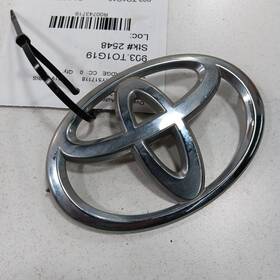
( Part Type: Trunk Lid Emblem ), ( Genuine Oem: Yes ), ( Ipn: 903.to1g19 ), ( Year: 2019 ), ( Descriptionpartcondition: The Pictures Are Of The Exact Part You Will Recieve. This Is A Hi ), ( Manufacturer Warranty: 60 Day ), ( Partout Id: A-112694694 )
Review TOYOTA Trunk Lid Logo Emblem Badge Rear Oem fits YARIS 2016–2020
The **Toyota Yaris (903.TO1G19) rear trunk lid emblem badge** from the **2016 2020 model years** is a meticulously crafted, high-quality automotive badge that embodies the sleek, modern identity of this compact yet sophisticated hatchback. Crafted from durable **die-cast zinc alloy**, this emblem is designed to withstand the elements, ensuring long-lasting clarity and sharpness even after years of exposure to sunlight, rain, and minor wear. The badge features Toyota s iconic **three-dimensional "T" logo**, which is intricately molded to create a subtle yet striking three-dimensional effect, giving it a premium, almost sculptural appearance. The edges are finely polished, while the surface exhibits a **high-gloss finish**, reflecting light in a way that enhances its prominence on the rear of the vehicle. The emblem is securely mounted with **stainless steel screws**, ensuring a tight, vibration-resistant fit that prevents loosening over time. Whether installed on a **2016 XR or XR-S model** with its sportier aesthetic or the more refined **2020 Hybrid or LE trim**, this badge seamlessly complements the Yaris s clean, aerodynamic design. Its precise dimensions and authentic styling make it an ideal replacement for those seeking to restore or upgrade their vehicle s rear finish, blending functionality with the timeless elegance of Toyota s branding.
### Pros and Cons of Buying a 2016 2020 Toyota Yaris (XE/XE-S/XE-S Premium) with a 2019 2021 "Toyota 903.to1g19" Trunk Lid Emblem Badge
#### **Pros**
1. **Reliability and Durability**
Toyota Yaris models from 2016 2020 are known for their robust engineering and long-term reliability. The 1.5L or 1.8L engines (depending on the market) are well-built, and the platform is designed to withstand daily wear and tear. Many owners report minimal major issues if the car is maintained properly.
2. **Fuel Efficiency**
The Yaris is one of the most fuel-efficient compact cars available, especially in hybrid form (though the non-hybrid versions are also efficient). The 2016 2020 models typically achieve **30 40 MPG combined**, making it ideal for city driving or long commutes.
3. **Low Maintenance Costs**
Toyota parts are widely available and affordable. Routine maintenance (oil changes, brake pads, etc.) is cheaper than many competitors. The engine and transmission are also less prone to catastrophic failures compared to some other brands.
4. **Safety Features**
Later models (2018 2020) come with advanced safety tech such as:- **Toyota Safety Sense (TSS)** (available on higher trims), which includes pre-collision braking, lane-keeping assist, and adaptive cruise control.
- Standard stability control, traction control, and multiple airbags.
- Good crash test ratings from the NHTSA and IIHS.
5. **Affordable Purchase Price**
Used Yaris models from this era are reasonably priced, especially compared to newer or luxury compact cars. A well-maintained 2016 2020 Yaris can be bought for **$10,000 $18,000**, depending on mileage and condition.
6. **Resale Value**
Toyotas hold their value better than most cars, so even a used Yaris retains decent resale potential.
7. **Comfortable Interior**
The cabin is well-insulated, reducing road noise, and the seating is supportive for short to medium trips. The infotainment system (on higher trims) is user-friendly, though basic models have a simpler setup.
8. **Compact Size with Practicality**
The Yaris is easy to park and maneuver in tight spaces, yet it offers surprisingly decent rear legroom and cargo space (about **13.1 cu. ft.** when seats are up).
9. **Hybrid Option (If Available)**
If you can find a **2016 2020 Yaris Hybrid**, it offers even better fuel economy (up to **50 MPG combined**) and lower emissions, though these models are rarer and may cost more.
10. **Toyota s Warranty Coverage**
Some of these models may still have **powertrain warranties** (36 months/36,000 miles) or **basic warranties** if purchased within the coverage period, adding extra peace of mind.
---
#### **Cons**
1. **Poor Build Quality in Some Areas**
While the engine and chassis are solid, some buyers report **plastic panel wear** (dash, door trims) and **squeaks/rattles** over time. The trunk lid badge you mentioned (likely a **2019 2021 "Toyota 903.to1g19" emblem**) suggests a possible **aftermarket or modified part**, which could indicate the owner has already made changes this might raise concerns about other modifications or neglect.
2. **Basic Interior on Lower Trims**
The **XE trim** has a very simple interior with minimal features (no power seats, basic audio, no heated seats). Higher trims (XE-S, XE-S Premium) improve this, but even then, the materials feel **cheaper than competitors** like Honda or Mazda.
3. **Ride Quality Can Be Firm**
The Yaris has a **stiff suspension setup**, which is good for handling but can make the ride feel **less comfortable on rough roads** compared to softer alternatives like the Honda Fit or Mazda2.
4. **Small Engine Power**
The **1.5L or 1.8L non-turbo engines** (depending on region) are efficient but **not powerful**. Acceleration is adequate for city driving but can feel sluggish when passing or merging on highways. The **2018 models with the 1.8L engine** are slightly better, but still not sporty.
5. **Infotainment System Limitations**
The **basic touchscreen (on lower trims) lacks Bluetooth, Apple CarPlay, or Android Auto** until 2018 . Even then, the interface is **clunky compared to modern standards**. Navigation is an optional extra.
6. **Rear Visibility Issues**
The **small windows and narrow rearview mirror** can make parking and reversing difficult, especially in tight spaces.
7. **Aftermarket Emblem Concerns**
The **2019 2021 "Toyota 903.to1g19" trunk lid badge** is unusual for a standard Yaris. This could mean:- The car was **modified or repainted** (which may indicate other hidden issues).
- The badge is **aftermarket**, suggesting the owner wanted to customize the look.
- There might be **unreported accidents or frame modifications** (always check for consistency in VIN history).
**Recommendation:** Ask the seller for proof of the badge s authenticity and inspect the car for signs of modifications (e.g., mismatched paint, uneven clear coat).
8. **Limited Cargo Space When Seats Are Up**
At **13.1 cu. ft.**, the trunk is **smaller than some competitors** (e.g., Honda Fit s 28.1 cu. ft.). Folding the rear seats helps, but it s still tight for larger items.
9. **Hybrid Models Are Expensive to Maintain**
If you opt for a **Yaris Hybrid**, replacement parts (e.g., high-voltage battery, hybrid-specific components) can be **more costly** than conventional models.
10. **Resale Depreciation**
While Toyotas hold value, the Yaris is **not a high-demand used car** compared to SUVs or sedans. If you plan to sell later, you may not get as much as you invested.
---
### **Key Considerations Before Buying**
1. **Check the VIN for Accidents or Flood Damage**
Use services like **Carfax, AutoCheck, or the National Motor Vehicle Title Information System (NMVTIS)** to verify the car s history. A clean report is crucial.
2. **Inspect for Rust (Especially in Snowy Regions)**
The Yaris is prone to **underbody rust** in areas with salted roads. Lift the car and check the **wheel wells, frame rails, and subframe** for corrosion.
3. **Test the Emblem Badge s Authenticity**
- A **factory emblem** should match the **VIN s production year** and **trim level**.
- An **aftermarket badge** may indicate **unreported modifications** or a **repainted car**.
- If the badge is **loose or poorly attached**, it could mean the seller is hiding something.
4. **Review Maintenance Records**
Ask for **service records**, especially for:- **Timing belt replacement** (critical for the 1.5L engine).
- **Transmission fluid changes** (automatic models).
- **Suspension and brake inspections**.
5. **Test Drive for Strange Noises or Vibrations**
Listen for:- **Knocking from the engine** (could indicate timing belt issues).
- **Unusual rattles or squeaks** (may indicate worn bushings or suspension).
- **Steering or braking feel** (soft or spongy steering could mean power steering issues).
6. **Compare Pricing Across Years**
- **2016 2017 models** are the cheapest but may have **older safety features**.
- **2018 2020 models** have **Toyota Safety Sense (TSS) and minor updates**, making them slightly more valuable.
- **Hybrid models** (if available) are **more expensive but fuel-efficient**.
7. **Consider Alternatives**
If you want a **more comfortable ride**, look at:- **Honda Fit** (better cargo space, softer ride).
- **Mazda2** (premium feel, sportier handling).
- **Hyundai Accent** (cheaper, more features for the price).
If you need **more power**, consider a **Toyota Corolla or Honda Civic**.
---
### **Final Recommendation**
**Buy the Toyota Yaris if:**You prioritize **fuel efficiency, low maintenance costs, and reliability** over luxury or performance.
You **drive mostly in the city** and need a **compact, easy-to-park car**.
The **trunk lid emblem is factory-installed** (verified via VIN) and the car has **clean maintenance records**.
You re okay with a **firm
Details:
Donor Vehicle - 2019 YARIS. It is stored in doors and ready to be shipped. Stock Number - 2548. Toyota Yaris Battery Cable 2020 2019 2018 2017 2016 OEM.
Warranty: All parts come with our standard 60 day warranty.
specifications trunklipa:
- for models: Yaris
- for makes: Toyota
- for years: 2016-2020
- part type: Trunk Lid Emblem
- genuine oem: Yes
- ipn: 903.to1g19
- year: 2019
- descriptionpartcondition: The Pictures Are Of The Exact Part You Will Recieve. This Is A Hi
- manufacturer warranty: 60 Day
- partout id: A-112694694
offer trunklipa:
- best offers: True
- quantity: 1
- options: Ship-to-home
- started: February 16, 2026
- sold: 0
- availability: In Stock
general trunklipa:
- Exterior Parts Accessories > doors, Trunk Lids Hatches > Hatches Trunk Lids
- condition: Used
returns trunklipa:
- paid by: Buyer
- time: 60 Days
- policy: Returns Accepted
payments trunklipa:
- wallet: Apple-pay
- other
- credit card: Diners-club
seller trunklipa:
- city: Sauk Centre, Minnesota
- rating: 99.6%
- # reviews: 27152
shipping trunklipa:
- type: Fixed
- class: Expedited
- carrier: USPS
- transit: 4-8 Days
- cost: $0.00
- service: USPS Priority Mail
Toyota Is Similar To:
- 04 05 Toyota Sienna Trunk-hatch-tailgate (26.2% similar) No expedited shipping is available. If an item arrives damaged, please via message within 24 hours for instructions...(June 5th, 2017)
- 04004-73106 0400473106 Toyota Weight Sensor Kit Oem (24.1% similar) Used sensors in good working condition...(May 24th, 2018)
- 11111-11111 Toyota Liftgate Trunk Lid Damaged (32.6% similar) The trunk need to be repaired, prime and painted.: this is a used factory part, not aftermarket. The trunk is in usable condition no chips, cracks, may have light scratches...(May 15th, 2018)
- 114404 Duraflex Toyota Subaru Brz Slipstream Trunk Piece For Scion (32.1% similar) Fiberglass CD signature black finish high quality weather resistant aluminum mesh grille where applicable proprietary polymer blend for maximum flexibility increased durability and longer service life reduced damage rate up to 75 limited warranty satisfaction guarantee dry fit the part before making...(October 15th, 2018)
- 170-60675f Toyota Trunk-hatch-tailgate Sienna 04 05 (31.2% similar) Engines are sold without starter, compressor, alternator, power steering pump. Doors, trunk lids, hatch, quarter panels: paint color is never guaranteed even if the codes are same. 2 cars off the same Assembly line can appear slightly different after some years depending on storage, wear, weather ...(March 9th, 2017)
- 170-60800f Trunk-hatch-tailgate Fits 12-14 Toyota Camry (13.8% similar) No expedited shipping options are available at this time. If an item arrives damaged, please immediately through messaging within at least 24 hours for further instructions...(February 10th, 2017)
- 19730024294 Toyota Rear Spoiler Wing Upper Lid Mounted Oem (27% similar) No exception. If item is shipped through greyhound, once shipped, it cannot be rerouted. States only. 48 states only. For items with free shipping, shipping is within the continental us. Please inquire when providing commercial address. If commercial address is considered as restricted access, ...(November 18th, 2018)
- 2101000101 76801-47070 7680147070 Toyota Prius Rear Trunk Lid Handle Finish Panel Trim Blue (29.8% similar) ...(June 28th, 2018)
- 2101011319 03-08 Toyota Matrix Trunk (25.4% similar) Please for more details before purchasing. Lift gate service is also extra. Please for a shipping quote. Please for a shipping quote...(November 10th, 2017)
- 4 Runner Toyota 2003-2009 Trunk-hatch-tailgate 1942912 170-60629a (37.4% similar) 2L, V6, etc. This will not affect the performance or function of part. This includes all requests for visual identifications on a part such as verification of the number that is printed or photo see below. With so many variations and applications our part may not be enough for you to certain it will...(March 9th, 2017)
- 42035f J000 Subaru Brz Condenser And Evaporator Scion Toyota Oem (13% similar) Subaru BR condenser and evaporator scion fr-s toyota GT86 oem 42035FJ000...(August 12th, 2018)
