BMW 8408708 Right Rear
fits model: X5, E53. make: Bmw. year: 1999–2006.
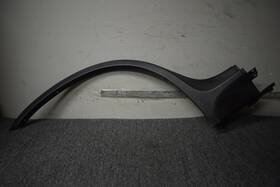
( Manufacturer Part Number: 8408708 ), ( Placement On Vehicle: Rear ), ( Country Of Origin: Germany )
Review BMW Right Rear Arch Trim fits X5 E53 1999–2006
The **BMW X5 E53 (1999-2006) Right Rear Wheel Hub Assembly (Part Number: 8408708)** is a critical component of the vehicle s suspension system, designed to ensure smooth, reliable, and precise handling while supporting the weight of the SUV s robust frame. This high-quality, precision-engineered hub assembly is integral to the E53 s legendary blend of off-road capability and on-road comfort, making it a sought-after replacement for owners seeking to restore or upgrade their vehicle s performance. Crafted from durable, high-strength materials, the hub features a robust bearing system that minimizes friction and wear, reducing the risk of premature failure while maintaining optimal rotational efficiency. The design incorporates a sealed housing to protect internal components from contaminants such as dust, moisture, and road debris, which is particularly important for the X5 s frequent use in varied terrains, from city streets to rugged backroads. The right-rear hub is engineered to accommodate the E53 s independent rear suspension (IRS) system, allowing for superior articulation and stability, even when carrying heavy loads or towing trailers. Whether replacing a worn-out original part or upgrading to enhance longevity, this aftermarket or OEM-quality hub assembly ensures a secure fitment with the E53 s drivetrain, brake calipers, and wheel studs, providing a seamless integration that restores the vehicle s intended performance characteristics. Ideal for both restoration projects and routine maintenance, this component is essential for maintaining the X5 s reputation as a versatile, high-performance luxury SUV that excels in both practicality and driving dynamics.
### **Pros and Cons of Buying a BMW X5 E53 (1999 2006) Right Rear (VIN: 8408708)**
#### **Pros**
1. **Strong Performance and Driving Dynamics**
The E53 X5 is one of BMW s most capable SUVs of its era, offering a balanced mix of power and handling. The available engines (M54 3.0L inline-6, M57 4.4L V8, and later M57 4.6L V8) provide strong acceleration, especially in the V8 models. The M57 engines are particularly durable if well-maintained, with high torque figures that make the X5 feel more like a luxury car than a traditional SUV.
2. **Reliability of the M57 Engine (V8 Models)**
While early inline-6 models (pre-2003) had some issues with timing chain stretch and oil consumption, the **M57 V8 (4.4L and 4.6L)** is one of the most reliable BMW engines of its time. With proper maintenance (regular valve cover gasket checks, oil changes, and timing chain inspection), these engines can easily exceed **200,000 300,000 miles**. The 4.6L version (introduced in 2004) is even more refined and torquey.
3. **Strong Resale Value and Collectibility**
The E53 X5 is highly sought after, especially in later model years (2004 2006) with the **4.6L V8, xDrive, and optional M5 performance package**. Even base models hold value well, making it a smart long-term investment if you plan to sell later. The **M5 version (E53 M5)** is particularly valuable, but even standard X5s appreciate over time.
4. **Luxury and Comfort**
The E53 was BMW s first true luxury SUV, featuring high-quality materials, a spacious cabin, and advanced features for its time (adaptive suspension, available air suspension, heated/ventilated seats, and a premium sound system). The **iDrive system (introduced in 2003)** was a step forward in infotainment, though it can be finicky.
5. **Off-Road and All-Wheel Drive Capabilities**
The E53 was one of the first BMWs to offer **xDrive (permanent all-wheel drive)**, which is far more capable than traditional part-time AWD systems. The **xDrive models (especially with air suspension)** handle rough roads and light off-roading better than most SUVs of the era. The **M5 s 6-speed ZF automatic** (with manual shift mode) is also a standout feature.
6. **Modding and Tuning Potential**
The E53 has a strong aftermarket, with options for **engine upgrades (turbocharging, supercharging), suspension modifications (lowering springs, coilovers), and performance exhaust systems**. The **M57 V8** in particular responds well to tuning, allowing for significant power gains without major stress.
7. **Durable Suspension and Chassis**
The E53 s **adaptive suspension (with air springs)** is one of the best in its class, providing a smooth ride while maintaining handling precision. The **M5 s rigid chassis and sport-tuned suspension** make it one of the most driver-focused SUVs ever made. Even standard models hold up well if maintained properly.
8. **Availability of Parts and Service Support**
While BMW dealership service can be expensive, the E53 has been around long enough that **aftermarket parts (especially for suspension, brakes, and electricals) are widely available**. Many independent BMW specialists still service these models, and the internet has made finding rare parts easier.
---
#### **Cons**
1. **Electrical Gremlins and Aging Electronics**
The E53, especially **pre-2003 models**, suffers from **electrical issues** failing window regulators, malfunctioning door locks, intermittent iDrive problems, and sensor failures (e.g., oil pressure, ABS). Later models (2004 ) improved reliability, but **water ingress into the iDrive system** remains a common issue. A **full electrical system check** is essential before purchase.
2. **Timing Chain and Valvetronic Issues (Pre-2003 M54 Engines)**
The **3.0L inline-6 (M54)** in early E53s is prone to **timing chain stretch, oil consumption, and Valvetronic motor failures**. If the car has **high mileage (over 150,000 miles)**, a **timing chain inspection and potential replacement** may be needed. The **M57 V8 (4.4L/4.6L) is far more reliable**, but even these can develop **oil leaks (valve cover gasket, oil filter housing gasket)** over time.
3. **Transmission Problems (Early ZF 5HP19 & 6HP21)**
The **early 5-speed ZF automatic (pre-2003)** can develop **slippage, rough shifting, and solenoid failures**. The **6-speed ZF (2003 )** is more refined but still not bulletproof **fluid changes every 50,000 60,000 miles** are critical. The **M5 s 6-speed manual (ZF S6)** is one of the best in its class but requires **proper maintenance**.
4. **Suspension Wear and Tear**
The E53 s **air suspension (if equipped)** can fail over time, leading to **uneven ride height, slow inflation/deflation, and sensor errors**. Even **coilover suspensions** can wear out, requiring **shock absorber and bushings replacement**. A **full suspension inspection** is a must.
5. **High Maintenance Costs**
BMW parts and labor are **expensive**, especially at dealerships. While independent shops can help, **regular maintenance (timing chain, valves, suspension, electricals) adds up**. If you re not prepared for **$1,500 $3,000/year in upkeep**, the E53 may not be the best choice.
6. **Fuel Economy is Mediocre**
The **V8 models (4.4L/4.6L) average 14 16 MPG**, while the **3.0L inline-6 does slightly better (16 18 MPG)**. This is **not great for daily driving**, especially with high fuel prices. If you do mostly highway driving, expect **$100 $150/month in gas**.
7. **Interior Wear and Tear**
The E53 s interior is **high-quality but not as durable as modern materials**. **Leather seats can crack**, **plastic trim wears out**, and **sun damage** (especially in the dash) is common. A **full interior inspection** is recommended before buying.
8. **Potential Rust Issues**
While not as severe as some German rivals, the E53 can develop **rust in wheel wells, rocker panels, and undercarriage**, especially in **salted climates**. A **pre-purchase inspection (PPI) with a rust check** is wise.
9. **Limited Modern Safety Features**
The E53 lacks **modern safety tech** like **stability control (ESC), advanced airbags, or blind-spot monitoring**. While **side airbags and ABS were standard**, the car is **not as safe in a crash as a modern SUV**.
10. **Resale Depreciation (If Not a Collector Model)**
While the E53 holds value well, **non-specialty models (base 3.0L, non-xDrive) depreciate faster** than **V8, xDrive, or M5 versions**. If you don t plan to keep it long-term, a **high-end E53 (M5, 4.6L V8, xDrive)** will be a better investment.
---
### **Conclusion and Recommendation**
#### **Who Should Buy an E53 X5?**
**Enthusiasts who prioritize driving dynamics** The E53 is one of the best-handling SUVs of its era, especially the **M5 and xDrive models**.
**Luxury and collectibility seekers** The E53 is a **highly desirable BMW**, with strong resale value, especially in later years.
**Those who want a capable AWD SUV** The **xDrive system is far superior** to most AWD SUVs from the 2000s.
**People who enjoy modding and tuning** The **M57 V8 responds well to upgrades**, and the aftermarket is strong.
**Owners who can afford maintenance** If you re prepared for **regular upkeep (timing chain, suspension, electricals)**, the E53 is a fantastic machine.
#### **Who Should Avoid It?**
**Budget-conscious buyers** **Maintenance costs add up**, and unexpected repairs (electrical, suspension, engine) can be expensive.
**Those who prioritize fuel efficiency** **V8 models drink gas**, and
Details:
part #: 8408708 prices
- $79.95-$146.19
specifications trunklipa:
- for models: X5, E53
- for makes: Bmw
- for years: 1999-2006
- mpn: 8408708
- placement on vehicle: Rear
- country of origin: Germany
offer trunklipa:
- started: March 3, 2026
- options: Ship-to-home
- quantity: 1
- availability: In Stock
- sold: 0
general trunklipa:
- Exterior Parts Accessories > doors, Trunk Lids Hatches > Hatches Trunk Lids
- condition: Used
shipping trunklipa:
- cost: $40.00
- class: Standard
- service: UPS Ground
- type: Fixed
- transit: 3-7 Days
- carrier: UPS
payments trunklipa:
- wallet: Paypal
- other
- credit card: Discover
returns trunklipa:
- time: 30 Days
- paid by: Seller
- policy: Returns Accepted
seller trunklipa:
- city: Alpharetta, Georgia
- rating: 99.5%
- # reviews: 2341
Bmw 8408708 Is Similar To:
- 0712pk0280 Bmw Rear Trunk Hinges Set With Damper Struts (25% similar) ...(March 23rd, 2018)
- 1365 R 661 0 Hku Bmw Rear Deck Lid Oem Take Off (25% similar) There is a small piece of the rear brake light missing otherwise very nice takeoff condition. For sale is a very nice oem rear deck lid off 2011 bmw M3. Part number 1365 r hug...(July 3rd, 2018)
- 141490 Bmw Oem Rear Trunk Lid Hatch Gate Hinge Hinges Strut (27.8% similar) Up for sale is a oem original bmw E60 550I spring...(February 18th, 2019)
- 1904968 Bmw Series Rear Trunk Lid Trim Cover Support Tail Panel (30.4% similar) For large items engines, doors, etc. It is important that if you are happy with your service and products, leave us a 5 start positive rating. If you don't want any surprises - keep in touch with the transporter yourself. They are often late and can come without a call at any time...(May 14th, 2018)
- 1947129 Bmw Touring Euro Rear License Plate Filler Holder Mounting Bracket (21.1% similar) Used in good condition oem bmw E30 touring license plate filler will work INS and with some trimming the sedan Cabrini coupe...(May 1st, 2018)
- 19730044259 Bmw Rear Left Or Right Trunk Lid Shock Strut (30.5% similar) No exception. Free shipping is within the continental us. Kindly ask questions before offer ends...(April 22nd, 2018)
- 19730044584 Bmw Rear Right Trunk Lid Hinge With Lift Cylinder Oem (26.3% similar) No exception. Free shipping is within the continental us. Kindly ask questions before offer ends...(June 23rd, 2018)
- 19730044627 Bmw Rear Left Interior Trunk Storage Shell Lid Oem (27% similar) No exception. Kindly ask questions before offer ends. Free shipping is within the continental us...(June 23rd, 2018)
- 19730052732 Bmw Sedan Rear Right Tail Light Gutter Cover Trim Oem (36.8% similar) No exception. For items with free shipping, shipping is within the continental us. Kindly ask questions before offer ends. Please inquire when providing commercial address. If commercial address is considered as restricted access, theres an extra charge around 80 varies by carrier item shipped ...(October 28th, 2018)
- 41-62-7-202-568 Bmw Trunk Hinge Set Left Right Oem (32.3% similar) Please through messages for expedited shipping quotes if an item arrives damaged, immediately messaging within at least 24 hours further instructions...(August 15th, 2018)
- 4107200968 Bmw Gran Turismo Gt Rear Trunk Hatch Lid Upper Window (31.9% similar) Please reverse the side indicated. Rarely, large or difficult to package items will take a day two longer. Guaranteed good working condition. The wiring harnesses are included as shown. This is a used original bmw part. Details can be viewed in the photos. Fitment information provided is us spec ...(August 21st, 2018)
