HONDA Eg Hatchback Trunk Tailgate 197525736086
fits make: Honda. year: 1992–1995.
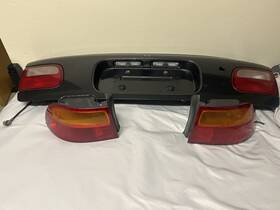
( Type: Hatch ), ( Color: Black ), ( Universal Fitment: No ), ( Finish: Painted ), ( Placement On Vehicle: Rear ), ( UPC: 197525736086 )
Review HONDA Eg Hatchback Trunk Tailgate fits 1992–1995
The **Honda 197525736086** is a high-quality, direct-fit replacement trunk tailgate designed specifically for **1992 through 1995 Honda Civic EG hatchback models**, ensuring a seamless and professional installation. Crafted from durable, corrosion-resistant materials, this tailgate is engineered to match the original vehicle s structural integrity while providing a secure and weatherproof seal. The design incorporates precise alignment points and reinforced hinges, allowing for smooth operation and long-lasting performance, even in varying weather conditions. Whether you re restoring a classic Civic or maintaining one in peak condition, this tailgate delivers the reliability and fitment accuracy expected from Honda s aftermarket parts. Its clean, factory-style appearance ensures it blends effortlessly with the rest of the vehicle s exterior, while the robust construction guarantees resistance against rust, dents, and daily wear. Ideal for both DIY enthusiasts and professional mechanics, this part is a straightforward upgrade that enhances both functionality and aesthetics, making it a must-have for any EG Civic owner looking to preserve their vehicle s value and curb appeal.
### Pros and Cons of Buying a 1992 1995 Honda Civic Hatchback (Model 197525736086)
#### **Pros**
1. **Reliability and Durability** Honda s reputation for longevity is well-earned. The 1992 1995 Civic (especially the E-series) is known for its robust engine (the 1.5L or 1.6L D15/D16), durable transmission, and simple mechanical design. With proper maintenance, many of these cars easily exceed 250,000 miles.
2. **Affordability** Used Civics from this era are relatively inexpensive compared to modern cars, making them a budget-friendly option. Parts are also widely available and reasonably priced.
3. **Fuel Efficiency** The 1.5L (E-series) and 1.6L (D-series) engines are known for their efficiency, often achieving 30 40 MPG in the city and 40 50 MPG on the highway. This was particularly valuable in the early '90s when gas prices were lower, but it remains a strong point today.
4. **Simple and Easy to Work On** The Civic s straightforward design means repairs are often straightforward, even for DIYers. Basic maintenance (oil changes, brake jobs, timing belt replacement) is manageable without specialized tools.
5. **Strong Secondary Market** Due to their popularity, parts, accessories, and aftermarket support are abundant. Swap meets, online marketplaces, and local mechanics have a wealth of resources for this model.
6. **Good Handling and Driving Experience** The Civic s compact size, lightweight chassis, and balanced suspension make it fun to drive, especially for its class. The hatchback body adds practicality with extra cargo space.
7. **Low Running Costs** Beyond basic maintenance, these cars rarely require expensive repairs. The 1.5L and 1.6L engines are known for their durability, and the manual transmission models (if available) are even more reliable.
8. **Classic Appeal** For enthusiasts, the 1992 1995 Civic holds a nostalgic charm. The E-series (1992 1995) is particularly sought after for its styling and performance, making it a fun project or daily driver.
9. **Manual Transmission Option** If you prefer driving a stick shift, some of these Civics come with the 5-speed manual, which is a joy to operate and adds to the car s appeal.
10. **Resale Value** While not as high as newer Hondas, the Civic s reputation ensures it holds value better than many contemporaries. Well-maintained examples can still fetch decent prices.
---
#### **Cons**
1. **Age and Wear** At nearly 30 years old, these cars will show signs of wear, such as rust (especially in the wheel wells, frame rails, and undercarriage), worn suspension components, and aging interior materials. A thorough inspection is critical.
2. **Rust Issues** The 1992 1995 Civic is notorious for rust, particularly in regions with harsh winters or salted roads. The floor pans, rocker panels, and rear quarter panels are common rust hotspots. A rust inspection (including an undercarriage scan) is essential before purchasing.
3. **Timing Belt and Water Pump** The 1.5L (E-series) and 1.6L (D-series) engines require the timing belt to be replaced every 60,000 100,000 miles to prevent catastrophic engine failure. If the previous owner neglected this, the engine could be at risk. The water pump is often replaced at the same time, adding to the cost.
4. **Interior Wear** The upholstery, dashboard plastics, and carpeting will show signs of aging. While not a major issue, it may affect comfort and resale value. Some models have vinyl seats that can crack over time.
5. **Electrical Quirks** Early '90s Hondas can develop electrical gremlins, such as faulty window regulators, intermittent lights, or issues with the radio or climate control. Testing these systems thoroughly is important.
6. **Transmission Wear** The automatic transmission (if equipped) may show signs of wear, such as delayed shifting or slipping. The manual transmission is generally more reliable but can still develop synchro issues over time.
7. **Limited Modern Safety Features** Unlike today s cars, the 1992 1995 Civic lacks modern safety features such as stability control, multiple airbags (beyond the driver and passenger front bags), or advanced braking systems. Safety is a trade-off for affordability.
8. **Fuel Injection Issues** The EFI system can develop problems over time, such as failing sensors, clogged injectors, or vacuum leaks. These issues can lead to rough idling, poor acceleration, or increased emissions.
9. **Tires and Alignment** Older cars often have worn tires or misaligned wheels, which can affect handling and safety. Replacing tires and performing an alignment should be part of the budget.
10. **Environmental Concerns** Older cars may not meet modern emissions standards, which could limit where you can drive them or require additional modifications (e.g., catalytic converter swaps in some states).
11. **Limited Aftermarket Support for Some Mods** While parts are available, some performance modifications (e.g., turbocharging the 1.5L) require specialized knowledge and may void warranties or cause reliability issues.
12. **Comfort and Noise** The cabin can feel cramped compared to modern cars, and road noise is more noticeable due to thinner sound insulation. The suspension is firm, which may not suit all drivers.
---
### **Conclusion**
The 1992 1995 Honda Civic Hatchback (E-series) is a fantastic choice for buyers who prioritize reliability, affordability, and driving enjoyment over modern amenities. It s an ideal car for those who:
- Want a low-cost, efficient daily driver or weekend project.
- Enjoy working on cars or have access to a mechanic for maintenance.
- Appreciate the car s nostalgic appeal and practical hatchback design.
- Are willing to invest time in inspections for rust, timing belt condition, and overall mechanical health.
However, it s not the best fit for buyers who:- Seek modern safety features or comforts (e.g., heated seats, backup cameras, advanced driver aids).
- Want a car that requires minimal upkeep or has a long-term warranty.
- Are sensitive to rust or prefer a car with a pristine interior.
- Plan to drive the car extensively without regular maintenance.
**Final Recommendation:**If you find a well-maintained example with a clean service history, no major rust, and a properly serviced timing belt, the 1992 1995 Honda Civic Hatchback is an excellent purchase. Focus on the following during your inspection:
- **Rust:** Check the undercarriage, wheel wells, and frame rails thoroughly.
- **Timing Belt:** Confirm the last replacement date and condition of the water pump and tensioner.
- **Mechanical Health:** Test the transmission, suspension, brakes, and electrical systems.
- **Documentation:** Ensure you have the original title, service records, and any relevant maintenance logs.
For the best value, consider buying from a reputable private seller or a trusted used car dealer who offers a warranty or inspection. If you re comfortable with basic maintenance, this Civic can be a rewarding and economical car for years to come. If you prefer a more hands-off experience, a slightly newer Honda (e.g., 2000s Civic) or a modern used car with modern safety features may be a better fit.
Details:
This includes: Mounting hardware Nuts and bolts for tailgate, tail lights All light wire harnesses before they go into the car wires cut to help soldering harness your hatch easier The start of Hatch lever cord Tail gate tethers attach. 1992 1995 EG Hatchback trunk tailgate Comes with every nut and bolt, wire.
part #: 197525736086 price
- $320.00
specifications trunklipa:
- for makes: Honda
- for years: 1992-1995
- type: Hatch
- color: Black
- universal fitment: No
- finish: Painted
- placement on vehicle: Rear
- upc: 197525736086
payments trunklipa:
- wallet: Google-pay
- other
- credit card: Discover
seller trunklipa:
- # reviews: 29
- city: Liberty, Texas
- rating: 100.0%
returns trunklipa:
- policy: Returns Accepted
- time: 30 Days
- paid by: Buyer
offer trunklipa:
- quantity: 1
- started: February 2, 2026
- sold: 0
- options: Ship-to-home
- availability: In Stock
general trunklipa:
- Exterior Parts Accessories > doors, Trunk Lids Hatches > Hatches Trunk Lids
- condition: Used
shipping trunklipa:
- carrier: USPS
- service: USPS Priority Mail
- type: Calculated
- cost: $0.00
- transit: 4-10 Days
- class: Expedited
Honda 197525736086 Is Similar To:
- 102879 Carbon Creations Oem Trunk Piece For Honda Ed (25.9% similar) Any problems. Parts such as lights, splutters, canards, paint, wings, and others accessories are not included unless specified in the. Carbon creations oem trunk - 1 piece for honda S2000 ed zoom questions about this part. Will it fit my vehicle. Pay close attention to the make, model and year, but ...(June 17th, 2018)
- 12269847 Aftermarket Products New Trunk Lid Sedan For Honda Civic (28.1% similar) The items are brand new parts that look and fit same as original, except at a much better price...(May 20th, 2018)
- 12696532 Aftermarket Products New Trunk Lid Sedan For Honda Civic (29.8% similar) The items are brand new parts that look and fit same as original, except at a much better price...(October 22nd, 2018)
- 12742614 Aftermarket Products New Trunk Lid Sedan Honda Civic (30.8% similar) The items are brand new parts that look and fit same as original, except at a much better price...(March 2nd, 2018)
- 170-60827b 35658 Civic 13 Honda Trunk Hatch Tailgate Us Market Cpe 1.8l Lx (32.3% similar) 13 honda civic trunk hatch tailgate us market cape if an item arrives damaged, please via message within 24 hours for instructions. No expedited shipping is available...(December 14th, 2016)
- 170-60831b Trunklid Trunk Decklid Honda Accord (31.4% similar) Doors are sold without trim panels and glass. Engine warranty: engines are sold as short block assembly and cylinder heads only. Warranty does not cover sensors, cables, coils, wires, injectors, electronics, belts, hoses, water pumps, intake exhaust manifold, and oil pans. Doors, trunk lids, hatch, ...(December 17th, 2016)
- 230943 Odyssey Trunk Lid Deck Hatch Tailgate Maroon R529p 11 12 13 Honda 170-50506b (28.8% similar) It is best to by phone buy used or through messaging. To apply the discount, please add both items to your cart. This part is covered by our 6 month warranty. There is no limit to the discount. The items must be added to your cart in order to apply the discount. Please see tutorial below for help ...(August 2nd, 2016)
- 167092 Civic 96 97 98 99 00 Honda Trunk Hatch Tailgate Cpe W O Spoiler 170-58527b (30.7% similar) If an item arrives damaged, please via message within 24 hours for instructions. No expedited shipping is available...(June 25th, 2016)
- 19730045720 Honda Insight Rear Exterior Tailgate Hybrid Emblem Oem (32.8% similar) Kindly ask questions before offer ends. Free shipping is within the continental us. No exception...(May 25th, 2018)
- 19730050573 Honda Accord Coupe Rear Trunk Lid Shell (31.8% similar) Please inquire when providing commercial address. If item is shipped through greyhound, once shipped, it cannot be rerouted commercial address considered as restricted access, theres an extra charge around 80 varies by carrier. No exception. Kindly ask questions before offer ends. For items with ...(August 26th, 2018)
- 1hgcv2f93ja009272 Honda Accord Trunk Lid Oem (34% similar) If the item ships FedEx, they will deliver and require signature. Shipping instructions: to us. Items are sold as is, what you see, is get all need repair and complete paint process if involved. If you are not sure. Hesitate to ask. Please examine all pictures and the carefully before purchasing...(July 11th, 2018)
