MAZDA 172.MZ1117 Hatchback Hatch Trunk Lid Shock Strut
fits model: Cx-3. make: Mazda. year: 2016–2018.
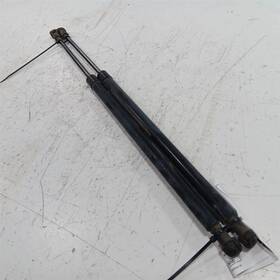
( Part Type: Trunk Lid Shock ), ( Genuine Oem: Yes ), ( Ipn: 172.mz1117 ), ( Year: 2017 ), ( Descriptionpartcondition: The Pictures Are Of The Exact Part You Will Recieve. This Is A Hi ), ( Manufacturer Warranty: 60 Day )
Review MAZDA Hatchback Hatch Trunk Lid Shock Strut Support Oe fits CX-3 2016–2018
The **Mazda CX-3 Hatchback (2016-2018) Rear Shock Strut Assembly (Part #172.MZ1117)** is a precision-engineered suspension component designed to deliver a perfect blend of comfort, handling, and durability for Mazda s compact crossover. This high-quality, direct-fit replacement strut is meticulously crafted to match the exact specifications of the original equipment manufacturer (OEM), ensuring seamless integration with the 2016, 2017, and 2018 model years of the CX-3 Hatchback. Built with a robust **gas-charged shock absorber**, it combines a durable coil spring, a robust coil spring seat, and a reinforced strut mount to maintain optimal ride height, absorb road imperfections, and enhance overall vehicle stability. The strut features a **high-performance valve system** that regulates damping force, providing a smooth yet responsive ride whether cruising on smooth highways or navigating rough terrain. Constructed from premium materials, including corrosion-resistant steel and durable rubber bushings, this strut is engineered to withstand the demands of daily driving, offering long-lasting performance even in varying weather conditions. Whether you're looking to restore your CX-3 s factory suspension feel or upgrade for improved handling, this **OEM-quality replacement** ensures a perfect fit, reliable operation, and the confidence of knowing your vehicle is supported by a component built to Mazda s exacting standards.
### **Pros and Cons of Buying a Mazda CX-3 (2016 2018) Hatchback (MZ1117) with a Damaged Rear Shock Strut**
#### **Pros**
1. **Reliable Engine and Transmission**
The Mazda CX-3 (2016 2018) is powered by a **2.0L Skyactiv-G 4-cylinder engine**, which is known for its durability, good fuel efficiency (around **24 28 MPG combined**), and smooth operation. The **6-speed automatic transmission** (or 6-speed manual in some trims) is also well-regarded for its responsiveness and longevity when properly maintained.
2. **Strong Resale Value and Brand Reputation**
Mazda has a reputation for building well-built, long-lasting vehicles. The CX-3 holds its value relatively well compared to many competitors, and the brand is known for quality materials and craftsmanship. This makes it a practical choice for buyers who want a dependable compact SUV/hatchback.
3. **Comfortable and Well-Built Interior**
The cabin is spacious for its class, with **good headroom, legroom, and cargo capacity (up to 30.9 cu. ft. behind the rear seats)**. The materials feel **premium for the price**, with a solid build quality that reduces road noise better than many rivals. The **Skyactiv-G engine s smooth power delivery** makes it enjoyable to drive, even in city traffic.
4. **Safety Features**
The CX-3 comes standard with **Mazda s i-Activsense safety suite**, which includes:- **Adaptive Cruise Control (ACC)**
- **Blind-Spot Monitoring (BSM)**
- **Rear Cross-Traffic Alert (RCTA)**
- **Lane Departure Warning (LDW)**
- **Forward Obstacle Warning (FOB)**
These features, combined with a **solid safety rating (IIHS Top Safety Pick in some years)**, make it a safer choice than many competitors in its class.
5. **Off-Road and On-Road Capabilities**
The CX-3 is marketed as a **crossover SUV**, but it also has **hatchback practicality**. The **all-wheel-drive (AWD) option** (available in some trims) provides better traction in light off-road conditions or winter driving. The **Skyactiv suspension** offers a good balance between comfort and handling, making it suitable for both city and highway driving.
6. **Low Maintenance Costs**
Mazda vehicles are known for **lower long-term maintenance costs** compared to Japanese rivals like Toyota or Honda. The **Skyactiv engine** has fewer moving parts than traditional engines, reducing wear and tear. If the shock strut issue is addressed, the rest of the vehicle should remain reliable.
7. **Good Fuel Economy**
With **MPG ratings around 24 28 combined**, the CX-3 is more efficient than many similar SUVs, making it cost-effective for daily commuting.
8. **Available Tech and Comfort Features**
Higher trims (like the **CX-3 Sport or CX-3 Turbo**) offer:- **Heated front seats**
- **10-inch touchscreen infotainment**
- **Wireless Apple CarPlay/Android Auto**
- **Leather-trimmed seats**
- **Ambient lighting**
Even base models come with **USB ports, a backup camera, and a decent sound system**.
9. **Easy to Modify and Maintain**
The CX-3 has a **simple underbody layout**, making it easier to work on than some competitors. Parts are widely available, and mechanics familiar with Mazda s Skyactiv technology are common.
10. **Good Value for the Money**
Compared to rivals like the **Honda HR-V, Subaru Crosstrek, or Ford EcoSport**, the CX-3 offers a **better balance of features, comfort, and reliability** at a similar price point.
---
#### **Cons**
1. **Damaged Rear Shock Strut (Major Concern)**
- The **rear shock strut** is a critical suspension component. A damaged one can lead to:- **Poor handling** (nose-diving, uneven ride height)
- **Excessive body roll** (reducing stability in turns)
- **Uneven tire wear** (leading to premature tire replacement)
- **Potential damage to other suspension parts** (if ignored)
- **Cost to replace:** A **new OEM or high-quality aftermarket shock strut** typically costs **$200 $400 per side**, plus labor (**$100 $200 per side**). If the strut mount is also damaged, additional repairs may be needed.
- **Risk of further damage:** Driving with a bad strut can stress the **control arms, bushings, or sway bar links**, increasing repair costs.
2. **Turbocharged Models (If Applicable) Have Higher Maintenance Needs**
- The **CX-3 Turbo (2017 2018)** has a **forced-induction engine**, which requires:- **More frequent oil changes** (every **5,000 miles** instead of 7,500)
- **Cooler intake air** (to prevent turbo lag)
- **Potential turbo failure** (if not maintained properly)
- If buying a **non-turbo model**, this concern is less relevant.
3. **Rear Seat Space is Tight for Adults**
- While the CX-3 has **good cargo space**, the **rear seats are narrow and not ideal for tall adults** or three passengers comfortably. This may be an issue for families or frequent rear-seat passengers.
4. **Resale Value Drops After 2018**
- The **2019 CX-3 received a minor refresh**, including updated styling and some tech improvements. Older models (2016 2018) may **depreciate faster** compared to newer ones.
5. **Some Complaints About Interior Quality Variations**
- While the cabin is well-built, **lower trims (like the base L or L Turbo)** use **more plastic and less premium materials** compared to higher trims. Some buyers report **cheaper-feeling plastics** in certain areas.
6. **AWD Models Are Heavier and Less Fuel-Efficient**
- The **AWD version** weighs more, which can **reduce fuel economy** (around **22 25 MPG combined** vs. **25 28 MPG for FWD**). It also has **higher maintenance costs** due to the extra drivetrain components.
7. **Limited Off-Road Capabilities (Non-Turbo Models)**
- While the CX-3 has **AWD and some off-road tuning options**, it is **not a true off-road vehicle**. It struggles on **deep mud, steep inclines, or rocky terrain** compared to dedicated SUVs like the **Subaru Forester or Jeep Renegade**.
8. **Infotainment System Can Be Laggy**
- The **10-inch touchscreen (on higher trims)** is decent but can **occasionally lag** when switching between apps. Some users report **slow response times** compared to competitors like Toyota or Honda.
9. **Noisy Cabin on Highway (Compared to Rivals)**
- While well-insulated, the CX-3 is **not as quiet as some rivals** (like the **Honda HR-V or Mazda CX-5**) at highway speeds due to **wind and road noise**.
10. **Limited Aftermarket Support (Compared to Toyota/Honda)**
- While not a dealbreaker, Mazda parts and modifications are **less common** than Toyota or Honda, which may make **tuning or customization harder** for some buyers.
---
### **Conclusion**
The **2016 2018 Mazda CX-3** is a **strong, well-built compact SUV/hatchback** with a **reliable engine, comfortable ride, and solid safety features**. However, the **damaged rear shock strut is a major concern** that must be addressed **immediately** to prevent further damage and ensure safety.
#### **Key Considerations Before Buying:****Fix the shock strut first** This is a **priority repair** to avoid worsening suspension issues.
**Check for related suspension wear** Inspect **control arms, bushings, and sway bar links** for damage.
**Verify maintenance history** Ensure **oil changes, timing belt (if applicable), and brake system** have been properly serviced.
**Test drive thoroughly** Pay attention to:- **Uneven ride height** (indicates strut issue)
- **Excessive body roll** (poor handling)
- **Strange noises** (clunks, rattles, or squeaks)
**Compare to alternatives** If the repair cost is too high, consider:- **Mazda CX-5 (more space, better resale)**
- **Honda HR-V (more reliable long-term)**
- **Subaru Crosstrek (better off-road, AWD standard)**
#### **Recommendation:**- **If the shock strut is the only major issue and you re comfortable fixing it yourself or paying for professional repair ( $400 $800 total), the CX-3 is a great buy.** It offers **better value
Details:
Stock Number - 2469. Flywheel Flex Plate Automatic Transmission Fits 16-22 MAZDA CX-3 OEM. It is stored in doors and ready to be shipped. Donor Vehicle - 2017 CX-3.
Warranty: All parts come with our standard 60 day warranty.
specifications trunklipa:
- for models: Cx-3
- for makes: Mazda
- for years: 2016-2018
- part type: Trunk Lid Shock
- genuine oem: Yes
- ipn: 172.mz1117
- year: 2017
- descriptionpartcondition: The Pictures Are Of The Exact Part You Will Recieve. This Is A Hi
- manufacturer warranty: 60 Day
offer trunklipa:
- started: February 3, 2026
- sold: 0
- availability: In Stock
- best offers: True
- options: Ship-to-home
- quantity: 1
payments trunklipa:
- wallet: Paypal
- other
- credit card: Mastercard
general trunklipa:
- Exterior Parts Accessories > doors, Trunk Lids Hatches > Hatches Trunk Lids
- condition: Used
shipping trunklipa:
- class: Expedited
- cost: $0.00
- transit: 3-7 Days
- service: USPS Priority Mail
- carrier: USPS
- type: Fixed
seller trunklipa:
- # reviews: 26865
- city: Sauk Centre, Minnesota
- rating: 99.6%
returns trunklipa:
- paid by: Buyer
- time: 60 Days
- policy: Returns Accepted
Mazda CX-3 Is Similar To:
- 03-12-m-6-atenza-bk Carbon Fiber Product For Mazda Rear Trunk Emblem Filler Decal (17.5% similar) All return items must be in brand new condition which means the item is never installed and kept original packaging. No tools required easy installation within 5 min. Each piece comes with a 3m adhesive backing for easy installation. Before sticking, completely clean off the wax and dust on sticker ...(June 8th, 2018)
- 16-present-mx5-nd-t-red Real Carbon Fiber Product For Mazda Miata Red Trunk Lid (23.7% similar) Any questions, please through message. Made of real carbon fiber with UV protection. Return amount does not include shipping and handling. Easy installation. Before sticking, completely clean off the wax and dust on sticker surface. All return items must be in brand new condition which means the ...(June 28th, 2018)
- Cx-7 Trunk Hatch Tailgate Fits 07 Mazda 4381945 170-50168d (29.7% similar) Mazda cx heated privacy glass, wiper, spoiler, w rear view camera this is a used rear deck lid tailgate hatch assembly. Spokane valley, wa. In the automotive world this can be quite a task. The compatibility section above is just a reference. Help our department is open 8 am to 5 pm pacific time...(September 17th, 2016)
- 57033 Tribute Trunk Hatch Tailgate Privacy Glass Fits 01-06 Mazda 170-60563b (31.3% similar) Compatibility described in this listing is guaranteed. For items damaged in transit we ask you to take a photo of the item and the package and immediately. Can be shipped to commercial addresses only. The quote you see is a total for shipping and handling. And it is added to shipping cost...(July 13th, 2016)
- 1f22 0648 Mazda Used Oem Genuine Rear Trunk Lock Lid Latch (32.4% similar) ...(June 18th, 2018)
- 3 181689933lkq Mazda Sedan Trunk Deck Lid Harness Reverse Lamps Oem Lkq (31.1% similar) They will not have any packaging included. Daytime phone number is required load will not deliver until appointment scheduled. Residential address - load is curbside delivery only someone over 18 must be present for...(June 10th, 2018)
- 3 Hatchback Spoiler Fits Mazda (26.7% similar) Trunk hatch tailgate hatchback spoiler fits mazda save. If an item arrives damaged, please immediately through messaging within at least 24 hours for further instructions. Please with any questions. No expedited shipping options are available at this time. B parts must have less than 200,000 total ...(November 9th, 2018)
- 3 Mazda 2014-2016 Rear Hatch (25.4% similar) All other parts come with the 100 day warranty. Shipping charges excluded. Some parts are limited due to part type. Engines, transmissions, sheet metal and body parts come with a 100 day warranty. If an item arrives damaged, please immediately through messaging within at least 24 hours. Electrical ...(October 25th, 2017)
- 8bl1-626-20 Oem Mazda Mpv Liftgate Right Side Passenger Lift Support Strut (28% similar) It is in very good condition. This offer is for a new oem mazda MVP lift gate right side passenger lift support strut...(June 30th, 2018)
- A-mx5-trunk-oe-nd Unbranded Carbon Fiber Rear Trunk For Mazda Miata Roadster (25.3% similar) This part is for a mazda MX-5 Marta, non RF, only soft top...(October 15th, 2018)
- B26h68310d65 Mazda Protege5 Hatchback Rear (27.3% similar) In pretty good condition overall. Is compatible with 2002 and 2003 model's. Shows normal signs of wearing and may be in need a cleaning. Everything is intact and functional as far we could tell. I will answer any questions to the best of my ability...(November 18th, 2017)
