NISSAN 170.DA1V25 Leaf Trunk Hatch Tailgate Trunk/hatch/tailgate
fits make: Nissan. year: 2025.
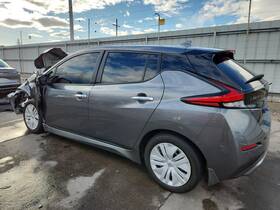
( Model: LEAF ), ( Part Type: Trunk ), ( Genuine Oem: Yes ), ( Ipn: 170.da1v25 )
Review NISSAN Leaf Trunk/hatch/tailgate fits 2025
The **2025 Nissan Leaf (170 DA1V25)** represents a bold leap forward in electric vehicle innovation, blending cutting-edge technology with the refined practicality of a spacious hatchback design. Engineered for urban agility and long-distance comfort, this all-new generation of Nissan s flagship EV features a striking, aerodynamic silhouette that enhances both aerodynamics and visual appeal. The **DA1V25** designation underscores its advanced powertrain architecture, incorporating a high-efficiency **147 kW (197 hp) synchronous AC motor** paired with a **62 kWh lithium-ion battery pack**, delivering an **estimated EPA range of up to 226 miles** on a single charge a significant improvement over its predecessor. The battery s compact yet high-density design allows for a **sleek, low-roof profile**, maximizing interior space while maintaining a sporty stance.
At its core, the 2025 Leaf prioritizes **versatility without compromise**, offering a **spacious 30.5 cubic feet of cargo capacity** behind the rear seats a volume that expands to **76.4 cubic feet** when the rear seats are folded down, making it ideal for everything from weekend adventures to urban errands. The **tailgate design** is both functional and intuitive, featuring a **one-touch release mechanism** and a **wide-opening angle** for effortless loading, while the **rear liftgate window** provides a clear view of the cargo area, reducing the need for bending. Inside, the Leaf s cabin is a study in modern minimalism, with a **12.3-inch digital instrument cluster** and a **15.0-inch touchscreen infotainment display** that integrates seamlessly with Nissan s **ProPILOT Assist** semi-autonomous driving suite, offering hands-free lane-keeping and adaptive cruise control for added convenience on highways.
Under the hood or rather, beneath the floor lies Nissan s **e-Power-inspired architecture**, where the battery and motor work in tandem to provide **instant torque and smooth acceleration**, while regenerative braking systems further enhance efficiency. The Leaf s **single-speed automatic transmission** ensures seamless power delivery, and its **all-wheel-drive option** (available in select trims) provides enhanced traction for varied road conditions. Sustainability is woven into the vehicle s DNA, with **recycled materials** used in the interior trim, a **low rolling resistance tire package**, and the option for **vehicle-to-load (V2L) charging**, allowing the Leaf to power household appliances or tools when needed.
For those who demand both style and substance, the 2025 Leaf arrives in a refined palette of exterior colors, including **Mystic Black Pearl**, **Deep Ocean Blue Metallic**, and **Pure White**, each complemented by premium interior options like **Nappa leather-trimmed seats**, **aluminum pedals**, and **ambient lighting** that adapts to the driver s preferences. The **ProPILOT Assist Drive** package elevates the experience further, adding **traffic jam assist** and **predictive forward collision warning**, ensuring a blend of safety and sophistication. Whether navigating city streets or cruising along scenic routes, the 2025 Nissan Leaf (170 DA1V25) stands as a testament to Nissan s commitment to redefining electric mobility where practicality, performance, and innovation converge in a vehicle that s as capable as it is compelling.
### Pros and Cons of Buying a 2025 Nissan Leaf (DA1V25) with a Trunk/Hatch/Tailgate
#### **Pros**
1. **Electric Efficiency and Cost Savings**
The 2025 Nissan Leaf is a fully electric vehicle (EV), offering significant fuel savings compared to internal combustion engine (ICE) cars. Electricity is generally cheaper per mile than gasoline or diesel, reducing long-term operating costs. Additionally, EVs require less maintenance, such as no oil changes, fewer brake replacements (due to regenerative braking), and fewer moving parts overall.
2. **Environmental Benefits**
As an EV, the Leaf produces zero tailpipe emissions, contributing to cleaner air and reduced carbon footprint. If charged with renewable energy, its environmental impact can be even lower.
3. **Regenerative Braking**
The Leaf s regenerative braking system helps recover energy during deceleration, improving efficiency and extending range. This feature also reduces wear on traditional brake pads, further lowering maintenance costs.
4. **Quiet and Smooth Ride**
EVs like the Leaf offer a smooth, quiet driving experience with instant torque delivery, making acceleration feel more responsive than many conventional cars.
5. **Incentives and Tax Benefits**
Depending on your location, purchasing an EV may qualify for federal, state, or local incentives, such as tax credits, rebates, or exemptions from certain fees (e.g., HOV lane access or registration fees). The 2025 Leaf may also benefit from these programs, though eligibility varies by region.
6. **Compact and Maneuverable Size**
The Leaf is a compact hatchback, making it easy to park and navigate in urban areas. Its small size also contributes to better fuel efficiency (or energy efficiency in this case) and lower insurance costs compared to larger vehicles.
7. **Nissan s EV Infrastructure and Support**
Nissan has been a pioneer in EV technology, and the Leaf has a proven track record. The 2025 model likely includes updates in software, charging capabilities, and driver-assistance features, ensuring reliability and modern amenities.
8. **Potential for Lower Insurance Costs**
EVs, including the Leaf, often have lower insurance premiums than gas-guzzling vehicles, especially in areas with high gas prices or strong environmental policies.
9. **Future-Proofing**
As governments and automakers push for electrification, owning an EV like the Leaf positions you ahead of potential future regulations or bans on gasoline vehicles in some regions.
10. **Tech and Convenience Features**
The 2025 Leaf likely includes modern infotainment systems, smartphone integration (Apple CarPlay/Android Auto), and advanced driver-assistance features (e.g., adaptive cruise control, lane-keeping assist), enhancing usability and safety.
---
#### **Cons**
1. **Limited Driving Range**
While the Leaf s range has improved over generations, it remains one of the biggest drawbacks of EVs. The 2025 model s range (likely around 150 220 miles on a full charge, depending on the trim and battery size) may not be sufficient for long-distance drivers or those who frequently take road trips. Range anxiety can be a real concern, especially in areas with limited or slow charging infrastructure.
2. **Charging Infrastructure Limitations**
While home charging is ideal, not everyone has access to a garage or dedicated parking with charging capabilities. Public charging stations can be inconvenient some may require payment, have limited availability, or take longer to charge than expected. Fast-charging stations (DC fast chargers) can deplete a battery quickly, reducing long-term efficiency.
3. **Higher Upfront Cost**
EVs like the Leaf often have a higher purchase price than comparable gasoline or hybrid vehicles. While incentives can offset this, the initial cost may still be prohibitive for some buyers. Additionally, battery replacement costs (if needed) can be significant, though Nissan s warranty may cover this for a period.
4. **Battery Degradation Over Time**
EV batteries degrade over time and with usage, leading to reduced range. While modern batteries are designed to retain a significant portion of their capacity for years, this is still a concern for long-term ownership. The Leaf s battery health will depend on charging habits, climate, and maintenance.
5. **Limited Towing or Hauling Capacity**
As a compact hatchback, the Leaf lacks the cargo or towing capacity of larger SUVs or trucks. If you need to transport large items, pets, or equipment frequently, the Leaf s trunk space (around 26 31 cubic feet, depending on seating position) may be insufficient.
6. **Weather and Climate Impact**
Cold weather can significantly reduce an EV s range, as battery efficiency drops in low temperatures. Similarly, extreme heat can also affect performance and longevity. Owners in harsh climates may need to plan charging more carefully.
7. **Resale Value Uncertainty**
The EV market is still evolving, and resale values for EVs can be harder to predict compared to traditional vehicles. While the Leaf has a strong reputation, future demand for used EVs depends on technological advancements, charging infrastructure, and consumer trends.
8. **Potential for Software Issues**
EVs rely heavily on software for features like infotainment, charging, and driver aids. While Nissan has improved its software over time, occasional bugs, updates, or compatibility issues could arise, requiring troubleshooting or dealer visits.
9. **Limited Off-Road or High-Performance Capabilities**
The Leaf is not designed for off-roading or high-performance driving. Its compact size and electric powertrain make it better suited for city driving and moderate highway speeds rather than rugged or sporty applications.
10. **Dependence on Charging Availability**
Unlike gas stations, which are ubiquitous, charging stations may not be as conveniently located, especially in rural areas. Planning trips around charging stops can be cumbersome, particularly for those unfamiliar with EV logistics.
---
### **Conclusion**
The 2025 Nissan Leaf (DA1V25) with a trunk/hatch/tailgate is an excellent choice for environmentally conscious buyers who prioritize cost savings, low maintenance, and urban driving. Its compact size, efficiency, and Nissan s EV expertise make it a practical option for commuters, city dwellers, or those with access to charging infrastructure. The incentives, lower operating costs, and smooth driving experience further enhance its appeal.
However, the Leaf s limitations such as range anxiety, charging accessibility, limited cargo space, and weather-related inefficiencies may not suit everyone. Long-distance drivers, those who frequently transport large items, or individuals in areas with poor charging networks should carefully consider whether the Leaf meets their needs. Additionally, the higher upfront cost and potential battery degradation over time are factors to weigh against the long-term savings.
### **Recommendation**
**Buy the 2025 Nissan Leaf if:**- You primarily drive short to moderate distances (e.g., daily commutes, errands, or light road trips).
- You have access to home charging or a reliable charging network along your regular routes.
- You value environmental benefits, lower fuel costs, and reduced maintenance.
- You prefer a compact, easy-to-park vehicle with modern tech features.
- You qualify for or can offset the higher purchase price with incentives.
**Avoid the 2025 Nissan Leaf if:**- You frequently take long road trips or need a vehicle for extended travel without easy charging access.
- You require significant cargo or towing capacity for work, hobbies, or family needs.
- You live in an area with extreme weather conditions that could severely impact range or battery life.
- You are uncomfortable with the idea of range anxiety or rely heavily on gas stations for refueling.
- You prefer a larger or more versatile vehicle (e.g., SUV or truck) for practicality or lifestyle needs.
For buyers who meet the criteria, the Leaf is a smart, forward-thinking purchase that aligns with the shift toward electrification. For others, exploring alternatives like the Tesla Model 3, Chevrolet Bolt, or a hybrid vehicle might better suit their lifestyle. Always test drive the Leaf to ensure it feels comfortable and practical for your daily use.
Details:
Warranty All parts including engines, transmissions, transfer cases, differentials, batteries come with a 30 day warranty.
specifications trunklipa:
- for makes: Nissan
- for years: 2025
- model: Leaf
- part type: Trunk
- genuine oem: Yes
- ipn: 170.da1v25
payments trunklipa:
- other
- wallet: Apple-pay
- credit card: Visa
shipping trunklipa:
- service: Flat Rate Freight
- cost: $349.97
- class: Freight
- type: Fixed
offer trunklipa:
- started: April 4, 2026
- availability: In Stock
- options: Ship-to-home
- sold: 0
- quantity: 1
returns trunklipa:
- paid by: Seller
- policy: Returns Accepted
- time: 30 Days
general trunklipa:
- Exterior Parts Accessories > doors, Trunk Lids Hatches > doors Door Skins
- condition: Used
seller trunklipa:
- city: Denver, Colorado
- # reviews: 6742
- rating: 99.1%
Nissan 675434 Is Similar To:
- 0155310051 Nissan Oem Trunk Panel Clip (32.3% similar) ...(September 19th, 2018)
- 13831375 Aftermarket Products New Trunk Lid For Nissan Sentra (19% similar) The items are brand new parts that look and fit same as original, except at a much better price...(April 27th, 2018)
- 14 Nissan Versa Trunk-hatch-tailgate 278379 (63.3% similar) No expedited shipping is available. If an item arrives damaged, please within 24 hrs for instructions...(April 29th, 2017)
- 14711 Nissan Altima Trunk Lid Latch Lock Release Power Actuator Oem (36.1% similar) Check the part numbers. It is in pre-owned condition. You are buying a trunk lid latch from nissan ultimo. The compatibility guide is just. Please zoom into all photos for details...(September 13th, 2018)
- 170-60847 13 14 15 Nissan Leaf (25.9% similar) Tailgates are used and may have misc dings scratches associated with use. No expedited shipping is available. If an item arrives damaged, please via message within 24 hours for instructions. Nissan leaf trunk hatch tailgate w navigation solar cell panel tailgates come in several different options...(February 12th, 2017)
- Rogue 2010 Nissan Hatch Trunk W Spoiler 170-50354a (40% similar) We remove oil pan and filters to inspect the unit. Torque converter must be properly seated and aligned to the front pump. N new part manufactured from scratch. If needed something else asap before purchasing. Check with the dealer. Components may be different. If heat tabs are melted or removed, ...(November 14th, 2016)
- 2007 Nissan Versa Hatchback Hatch (36.4% similar) If an item arrives damaged, please via message...(November 29th, 2017)
- 2007 Nissan Versa Trunk Latch (45.2% similar) If an item arrives damaged, please via message. No expedited shipping is available...(November 29th, 2017)
- 25210-cb800 25210cb800 Oem Nissan Factory Genuine Murano Trunk Switch Day Handling Match (30.8% similar) In most cases they're exact and some instances estimated. The parts listed may fit other makes and model's of cars than are. The only exceptions to this is when a part other than shown in offer sent out, item damaged or not functioning. Take pictures of the box and damaged item immediately. These ...(November 20th, 2018)
- 25380jl30b Nissan Infiniti Oem Trunk Switch (36.7% similar) All airbag modules are also non returnable. Est, Mon to Fri...(August 20th, 2018)
- 591008n350z Urethane Hatch Spoiler Wing For Nissan (11.4% similar) Pictures are meant to show the of items in listing and some cases may not necessarily exact year make model vehicle listed title. Utilizing the decades of aerodynamic design experience, 3DCARBON has quickly established themselves as a leader in and manufacturing automotive restyling products ...(August 27th, 2018)
