MITSUBISHI 170-58305C Trunk Hatch Tailgate Trunk/hatch/tailgate 8297
fits model: Eclipse. make: Mitsubishi. year: 1990–1994.
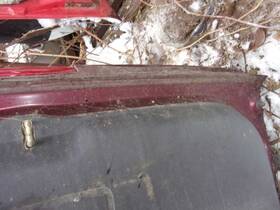
( Part Type: Trunk ), ( Conditions Options: Burgand, Heat, Gs ), ( Genuine Oem: Yes ), ( Ipn: 170-58305c ), ( Placement: Decklid / Tailgate ), ( Year: 1992 )
Review MITSUBISHI Trunk/hatch/tailgate fits ECLIPSE 1990–1994
The **Mitsubishi 170-58305C Trunk/Hatch/Tailgate** is a meticulously engineered component designed specifically for the **1990 1994 Mitsubishi Eclipse (8297 series)**, ensuring a seamless fit for both hatchback and coupe models. Crafted from high-quality, durable materials, this tailgate is built to withstand the rigors of daily use while maintaining a sleek, factory-inspired appearance. The design features a robust **one-piece construction**, eliminating the need for additional seals or gaskets, which reduces the risk of leaks and enhances water resistance. The latch mechanism is precision-engineered for smooth operation, providing a secure yet effortless closing and opening experience, even in challenging weather conditions. This tailgate is compatible with both **manual and power-operated** systems, making it versatile for a range of vehicle configurations. Its **polished finish** ensures a seamless blend with the original bodywork, while the reinforced structure guarantees long-term durability against dents, warping, or misalignment. Whether used for original equipment replacement or customization, the **170-58305C** delivers a perfect balance of functionality, aesthetics, and reliability, restoring or enhancing the Eclipse s performance and curb appeal with minimal effort.
**Pros and Cons of Buying a Mitsubishi 170-58305C (1990-1994 Eclipse 8297 with Trunk/Hatch/Tailgate)**
### **Pros**
1. **Reliability for the Era** The 1990-1994 Mitsubishi Eclipse (specifically the 8297 model with the 2.0L or 2.5L 4G93 engine) is known for being a solid, well-built coupe with a reputation for longevity if maintained properly. Many examples from this generation have exceeded 200,000 miles with basic care.
2. **Affordable Purchase Price** Due to its age, parts availability, and market demand, these models are typically priced reasonably, making them a budget-friendly option for enthusiasts or those looking for a classic JDM car.
3. **Strong Engine Options** The 4G93 engine (2.0L or 2.5L) is a durable inline-four with a simple design, known for holding up well with proper maintenance. It s also a popular platform for tuning, allowing for aftermarket upgrades like turbocharging or forced induction.
4. **Classic JDM Styling** The Eclipse s sharp, angular design from the early '90s remains iconic, appealing to fans of retro Japanese styling. The hatchback/trunk variant adds practicality without sacrificing aesthetics.
5. **Aftermarket Support** The Eclipse has a strong aftermarket community, with readily available parts for suspension, brakes, interior upgrades, and performance modifications. Tuning options like ECU remaps, exhaust systems, and engine swaps (e.g., 4A-GE or 4A-GZE) are well-documented.
6. **Manual Transmission Availability** Many of these models come with a smooth 5-speed manual transmission, which is highly desirable for driving enjoyment and adds to the car s appeal for enthusiasts.
7. **Potential for Restoration or Modification** If purchased in a projectable condition, the Eclipse can be restored to showroom quality or heavily modified for performance. The body is relatively simple to work on compared to some other JDM cars.
8. **Good Handling Dynamics** The Eclipse was designed with sporty handling in mind, featuring a stiff chassis, responsive steering, and a low center of gravity (especially in coupe form). The hatchback variant may have slightly different weight distribution but retains much of the same driving feel.
9. **Fuel Efficiency** For its time, the Eclipse offered decent fuel economy, especially in the naturally aspirated 2.0L or 2.5L configurations. This makes it a practical choice for daily driving if maintained well.
10. **Community and Enthusiast Appeal** The Eclipse has a dedicated following, with clubs, forums, and events (e.g., JDM meets) where owners can connect, share knowledge, and find parts. This community support can be invaluable for troubleshooting and project planning.
---
### **Cons**
1. **Aging Mechanical Components** Like any car from this era, the Eclipse may suffer from wear in critical areas such as the suspension (ball joints, bushings, shocks), brakes (rotors, calipers), and drivetrain (universal joints, driveshafts). Rust can also be an issue, particularly in the subframe, wheel wells, and undercarriage.
2. **Electrical System Reliability** The early '90s Mitsubishi electrical systems can be finicky, with issues like faulty sensors, intermittent wiring problems, or failing alternators. The fuse box and wiring harness may require attention over time.
3. **Transmission Wear** Both automatic and manual transmissions in this era can develop leaks, rough shifting, or internal wear if not properly maintained. The 5-speed manual is generally robust, but the automatic (if equipped) may require more frequent fluid changes.
4. **Rust Concerns** Many Eclipse models from this period were not built with rust resistance in mind. Potential rust hotspots include the wheel arches, rocker panels, subframe, and rear quarter panels. A thorough inspection (especially in snowy or coastal climates) is essential.
5. **Limited Modern Safety Features** The Eclipse lacks modern safety features such as stability control, advanced airbag systems, or modern crash-test ratings. This makes it less suitable for drivers who prioritize safety above all else.
6. **Parts Availability and Costs** While parts are generally available, some aftermarket or rare components (e.g., specific suspension parts, rare interior trims) can be expensive or difficult to source. Original manufacturer parts may also be costly due to age.
7. **Fuel and Emissions Compliance** If you plan to drive the car frequently, you may encounter challenges with modern fuel standards (e.g., ethanol blends) or emissions regulations, depending on your location. Some states or countries have restrictions on older vehicles.
8. **Interior Wear and Tear** The interior of a 1990-1994 Eclipse may show significant wear, including cracked dash panels, faded upholstery, or failing electrical components (e.g., power windows, seats). Restoring the interior can be labor-intensive and expensive.
9. **Potential for Hidden Damage** Without a thorough inspection, issues like frame damage, engine misfires, or transmission problems may not be immediately obvious. Buying from a private seller without a pre-purchase inspection can be risky.
10. **Depreciation and Resale Value** While the Eclipse holds value among enthusiasts, its resale value is not as strong as some other classic or modern cars. If you plan to sell it in the future, the return on investment may not be high unless it s in excellent condition or heavily modified.
11. **Maintenance Costs** Routine maintenance (e.g., timing belt replacement, suspension refresh, brake jobs) can add up over time. The timing belt on the 4G93 engine should be replaced every 60,000 100,000 miles to avoid catastrophic failure.
12. **Driving Comfort in Modern Context** The Eclipse s firm suspension and lack of modern sound insulation mean it can be noisy and less comfortable for long-distance driving compared to modern vehicles. This may not be ideal for daily commuting unless you prioritize driving dynamics over comfort.
---
### **Conclusion**
The Mitsubishi 170-58305C (1990-1994 Eclipse 8297) is a compelling choice for buyers who appreciate classic JDM styling, enjoy working on projects, or are looking for a reliable, modifiable coupe with a strong aftermarket. Its strengths lie in its durability, tuning potential, and enthusiast appeal, while its weaknesses include potential rust, aging mechanical components, and higher maintenance costs over time.
This car is best suited for:- **Enthusiasts** who enjoy restoring or modifying vehicles.
- **Budget-conscious buyers** who prioritize character and driving dynamics over modern convenience.
- **Drivers** who are prepared to invest time and effort into maintenance and upkeep.
- **Those who value the JDM aesthetic** and community support.
It may not be ideal for:- **Casual drivers** who want a hassle-free, modern vehicle.
- **Buyers who prioritize safety or fuel efficiency** over driving enjoyment.
- **Those without mechanical experience** who cannot handle basic repairs or inspections.
---
### **Recommendation**
If you decide to purchase this Eclipse, follow these steps to maximize your experience:1. **Get a Pre-Purchase Inspection (PPI)** Hire a trusted mechanic to thoroughly inspect the engine, transmission, suspension, and body for rust or damage. This is critical to avoid costly surprises.
2. **Check the Service History** A well-documented maintenance history (oil changes, timing belt replacements, etc.) is a strong indicator of the car s condition.
3. **Test Drive Carefully** Pay attention to unusual noises (e.g., rattles, clunks), smoothness of the transmission, and handling behavior. Test the brakes, suspension, and electrical systems (windows, lights, etc.).
4. **Budget for Repairs** Be prepared for potential expenses, especially if the car is in projectable condition. Allocate funds for rust repairs, suspension refreshes, and engine maintenance.
5. **Join the JDM Community** Engage with Eclipse or Mitsubishi forums (e.g., Eclipse Owners Club, Mitsubishi forums) for advice, part recommendations, and troubleshooting.
6. **Consider a Project vs. Ready-to-Drive Decision** If you re not ready to commit to a full restoration, look for a car that s already been maintained or restored. If you re up for a project, prioritize a car with a clean title and minimal rust.
Ultimately, the Eclipse is a fantastic car for the right owner one who appreciates its blend of reliability, mod potential, and timeless design. With proper care, it can be a rewarding and enjoyable vehicle for years to come.
Details:
A telephone number is required. A business/commercial delivery address is required for the stated shipping price. Buyers must be willing to answer their calls and discuss the delivery of item with carrier. Specific item information and warranty is posted on the listing.
This system was designed as a benchmark with certain understandings. That is not the way this system was designed. Visual flaws still may be present as the item is used. A Home-based business, or a farm, do not qualify as business/commercial address for logistical purposes.
Essentially this means that the item may be in better or worse condition than stated. Residential Limited Access fees range from $50-$100. Lift gate Fees range from $50-$100. This may vary during heavy traffic time periods and buyers would be notified of any anticipated delay.
Common used part visual blemishes most likely present. Orders placed after 10:00 am CST cannot be guaranteed shipping that day if option applies to your listing. Does not include any rear mounted lights, the spoiler, shocks, keys or mounting hardware. Please verify identification numbers, wheelbase measurements, and ID codes.
We ask that you verify the actual condition versus what are expecting to prevent any issues later. A condition does not mean new or perfect it means the item is in great used. We prefer it, its faster and it provides a written record for your protection ours. Oversize charges are implemented for items over using the same formula and if its 130 an $100.00 charge is applied.
They are not reflective of the actual part or condition being sold. Most carriers do not allow hand unloading. As well charges are based on dimensional weight, not actual weight. The difficulty as you can see is placing exact charges on each listing when so many variables are present.
If an RMA# is not provided there may be a delay in processing the return.
part #: 170-58305c prices
- $60.00-$116.91
specifications trunklipa:
- for models: Eclipse
- for makes: Mitsubishi
- for years: 1990-1994
- part type: Trunk
- conditions options: Burgand, Heat, Gs
- genuine oem: Yes
- ipn: 170-58305c
- placement: Decklid / Tailgate
- year: 1992
offer trunklipa:
- quantity: 1
- best offers: True
- availability: In Stock
- sold: 0
- started: March 12, 2026
- options: Ship-to-home
returns trunklipa:
- policy: Returns Accepted
- time: 30 Days
- paid by: Buyer
general trunklipa:
- condition: Used
- Exterior Parts Accessories > doors, Trunk Lids Hatches > Liftgates
payments trunklipa:
- other
- wallet: Paypal
- credit card: Diners-club
shipping trunklipa:
- type: Fixed
- class: Freight
- service: Flat Rate Freight
- cost: $310.00
seller trunklipa:
- rating: 99.8%
- city: Arena, Wisconsin
- # reviews: 9791
Mitsubishi 8297 Is Similar To:
- 5920a092 Mitsubishi Oem 12-17 Lancer-trunk (33.3% similar) Est, Mon to Fri...(November 2nd, 2017)
- 5925a003 Mitsubishi Lancer Oem Trunk Lid Lift Shocks Stock Factory (37.9% similar) Mitsubishi lancer oem trunk lid lift shocks stock factory...(August 29th, 2018)
- Aw343353 Mitsubishi Trunk Release Cable (40% similar) Matt blat mitsubishi item details brand: brand: oem trunk release cable part number: AW343353 main group: 42 sub-group: 510 NC: 64302 condition: new this is the for a diamante...(September 9th, 2017)
- Ebl-0003 Evo Mitsubishi Evolution 8 9 4 Door Oe Style Carbon Fiber Trunk (26.1% similar) Let talk WC can custom manufacture parts to accommodate targeted characteristic optimization for non standard applications lighter weight, higher strength, minimized distortion, re enforced linear stability, etc. This is a direct replacement to factory trunk lid no modifications required. Carbon ...(November 9th, 2016)
- Fits Mitsubishi Pickup Tmitsu (35.8% similar) Used engines guaranteed against rod knock, excessive smoking, and oil consumption transmissions must be installed to current oem specifications for a new transmission install. Carburetor distributor, fuel pump, etc. Install new seals, gaskets, filters, bolts, plugs, sensors, boxes, thermostats, ...(October 25th, 2018)
- Mb927091 Mitsubishi Oem Galant Trunk Bar Torque Rod Left (36.1% similar) ...(September 23rd, 2018)
- Mf140024 Mitsubishi Genuine Eclipse Hinge (41.1% similar) Electrical parts are not returnable. Parts must be resalable and in the original packaging. Shipping carrier substitutions may be made at our determination in an attempt to reduce cost the customer...(November 2nd, 2017)
- Mf243653 Mitsubishi Genuine Eclipse Hinge (41.1% similar) Electrical parts are not returnable. Shipping carrier substitutions may be made at our determination in an attempt to reduce cost the customer. Parts must be resalable and in the original packaging...(November 2nd, 2017)
- Mn159040 Mitsubishi 2006-2010 Eclipse Spyder (41.8% similar) Donor vehicle: year: 2007 make: mitsubishi model: eclipse spider exterior color: A88D interior trim: 26H production date: 10 05 transmission: automatic mileage: 125,632 condition: used placement: rear trunk part number: MN159040: oem lid hinges are in good working order. Part is used and has ...(June 16th, 2017)
- Tl0809mitevox-dry Seibon Dry Matte Carbon Trunk Lid For 2008-2012 Mitsubishi Lancer Evo (20.9% similar) Purchase from map to receive aggressive pricing and retain your manufacturer's warranty. All dry carbon products are matte finish. Please see the for information regarding shipping costs and available shipping methods...(September 18th, 2016)
- Tl0305mitevo8-c Seibon Carbon Fiber Trunk Lid For Mitsubishi Lancer 730656651447 (23.3% similar) Purchase from map to receive aggressive pricing and retain your manufacturers warranty...(February 7th, 2019)
