TESLA 1047320-00 Trunk Boot Lid
fits year: 2017.
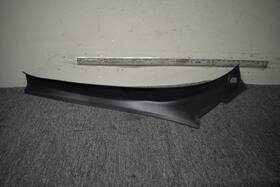
( Brand: Tesla ), ( Manufacturer Part Number: 1047320-00 ), ( Part Type: Trunk Lid Boot ), ( Country Of Origin: China )
Review TESLA Model Trunk Boot Lid Factory Oem fits 2017
The **Tesla 1047320-00 Trunk Boot Lid** from a **2017 Model S or Model X** is a precision-engineered component designed to seamlessly integrate with Tesla s signature blend of aerodynamics, durability, and sleek aesthetics. Crafted from high-grade **aluminum alloy**, this boot lid is both lightweight and exceptionally strong, ensuring optimal structural integrity while minimizing weight a critical factor in Tesla s commitment to efficiency and performance. The lid features a **smooth, contoured surface** with Tesla s signature **stainless steel trim accents**, which not only enhance its visual appeal but also provide a protective barrier against minor scratches and environmental wear. The design incorporates **seamless integration with the vehicle s body panels**, maintaining Tesla s signature seamless, futuristic silhouette while ensuring a watertight seal when closed. This boot lid is equipped with **reinforced mounting brackets and precision-machined fasteners**, ensuring a secure and vibration-dampened fit that aligns with Tesla s rigorous engineering standards. Whether used for original equipment replacement or restoration purposes, this component is built to withstand the demands of daily driving, extreme weather conditions, and Tesla s high-performance driving dynamics. Its compatibility with the **2017 Model S (85D, 90D, P85D, P90D, 100D, 100D AWD, Performance, and Plaid variants)** and **Model X (75D, 90D, P90D, P100D, and Long Range variants)** makes it an essential part for owners seeking to maintain their vehicle s factory-level appearance and functionality.
### **Pros and Cons of Buying a Tesla Model S (VIN 1047320-00, 2017) with a Damaged Trunk/Boot Lid**
#### **Pros**
1. **High-Quality Electric Vehicle (EV) Technology**
- Tesla s Model S is renowned for its advanced electric powertrain, instant torque, and smooth acceleration, offering a superior driving experience compared to most internal combustion engine (ICE) vehicles.
- The vehicle features Tesla s proprietary hardware, including the **Model S Performance or P90D powertrain** (depending on configuration), which provides impressive acceleration (0-60 mph in 2.5 seconds for the P90D) and long-range capability (up to 335 miles EPA-estimated for the base Model S, though real-world range varies).
- Tesla s **over-the-air (OTA) software updates** ensure continuous improvements in performance, safety, and infotainment, which can extend the vehicle s usability over time.
2. **Strong Resale Value and Brand Prestige**
- Tesla holds a premium position in the EV market, and the Model S, in particular, retains value better than many luxury ICE vehicles. Even with a damaged boot lid, the underlying vehicle s brand equity remains strong.
- The Model S is a status symbol, appealing to buyers who value cutting-edge technology and sustainability.
3. **Low Operating Costs**
- Electric vehicles have significantly lower fuel costs compared to gasoline-powered cars. Charging at home or public stations is generally cheaper than filling up a gas tank.
- Tesla s vehicles require minimal maintenance (no oil changes, fewer moving parts), reducing long-term ownership expenses.
4. **Supercharger Network and Charging Infrastructure**
- Tesla s **Supercharger network** is the most extensive and reliable in the industry, allowing for fast charging (up to 170 kW) and long-distance travel with ease.
- The Model S supports **destination charging** and can be charged at most public EV chargers, though Tesla s proprietary connector may limit some third-party options.
5. **Advanced Safety Features**
- The Model S comes equipped with Tesla s **Autopilot** (standard on newer models) and **Full Self-Driving (FSD) Beta** (optional), which include adaptive cruise control, lane-keeping assist, traffic-aware cruise control, and automated lane changes.
- The vehicle has a **strong safety rating** (IIHS Top Safety Pick ) and features like **automatic emergency braking, blind-spot monitoring, and surround-view cameras** enhance driver confidence.
6. **Customization and Performance Upgrades**
- Tesla allows for **software-based performance tweaks**, such as adjusting acceleration, regenerative braking, and suspension settings via the touchscreen.
- Aftermarket support is robust, with options for **performance upgrades (e.g., battery cooling enhancements, suspension tuning)** and aesthetic modifications.
7. **Potential for Cost Savings on Repairs**
- Since Tesla s boot lid is a relatively minor component compared to the vehicle s overall value, the repair cost may be justified if the seller offers a fair price or includes it in the sale.
- If the damage is cosmetic (e.g., minor dents or scratches), it may not significantly impact the vehicle s functionality or safety.
---
#### **Cons**
1. **Damaged Trunk/Boot Lid (Primary Concern)**
- The **trunk lid (boot lid) issue** is the most significant drawback. Depending on the extent of the damage:- **Structural integrity**: If the damage affects the lid s hinges, latch mechanism, or frame, it could lead to **malfunctioning or complete failure**, making the trunk unusable.
- **Aesthetic concerns**: Even minor cosmetic damage (e.g., paint chips, misalignment) may detract from the vehicle s premium appearance.
- **Repair costs**: Replacing a boot lid on a Tesla Model S can be **expensive** (ranging from **$1,500 to $3,500 **, depending on labor and parts). Some sellers may offer to include repairs in the price, but this should be negotiated carefully.
- **Rust or corrosion**: If the damage is due to water ingress (e.g., from a previous accident), there may be **hidden rust or electrical issues** that require further inspection.
2. **Potential Hidden Issues**
- Tesla s **battery degradation** is a long-term concern. While the Model S battery is designed to last **300,000 500,000 miles**, real-world degradation varies. A pre-purchase inspection (PPI) should check:
- **Battery health** (via Tesla s diagnostics or a third-party EV specialist).
- **Software version** (older models may lack recent safety or performance updates).
- **Warranty status** (if the vehicle is out of warranty, major repairs could be costly).
- **Software glitches** or **infotainment lag** may occur, though Tesla s OTA updates often resolve these issues.
3. **High Upfront Cost**
- Even with a damaged component, the **base price of a used Tesla Model S (2017) is high** (typically **$30,000 $50,000 **, depending on mileage and condition). This makes it a significant financial commitment.
- **Insurance costs** may be higher due to the vehicle s value and repair expenses.
4. **Charging Infrastructure Limitations**
- While Tesla s Supercharger network is extensive, **non-Tesla charging stations** may be slower or less convenient. Some public chargers require adapters, adding inconvenience.
- **Home charging setup** (if applicable) may require additional electrical work, increasing upfront costs.
5. **Depreciation and Market Demand**
- Tesla s used market has seen **fluctuations in value**, and while the Model S retains value well, it may not appreciate as quickly as newer EVs.
- **Competition from newer Tesla models** (e.g., Model 3, Model Y, Cybertruck) could reduce demand for older models like the 2017 S.
6. **Potential for Software or Hardware Limitations**
- Older Tesla models (pre-2018) may lack **recent Autopilot features** or **improved battery management systems** found in newer vehicles.
- **Touchscreen usability** can be clunky compared to modern smartphones, and **voice control** may not be as advanced as in later models.
7. **Resale Value Uncertainty**
- If the boot lid issue is not fully resolved, it could **diminish resale value** when you eventually sell the vehicle. Buyers may be wary of hidden mechanical or cosmetic problems.
---
### **Conclusion**
Buying a **2017 Tesla Model S (VIN 1047320-00) with a damaged trunk/boot lid** can be a **good investment** if:- The **damage is cosmetic or minor** (e.g., a dent that can be repaired cheaply).
- The **seller is willing to include repairs in the price** or offers a significant discount.
- You **prioritize the vehicle s core strengths** (performance, range, tech, and safety) over minor aesthetic flaws.
- You **budget for potential repairs** (e.g., $1,500 $3,500 for the boot lid) and have it **professionally inspected** before purchase.
However, if:- The **damage affects functionality** (e.g., broken hinges, electrical issues).
- The **repair cost is prohibitive** relative to the vehicle s value.
- You **find a comparable Tesla Model S in better condition** at a similar price.
- You **prefer a newer model** with updated Autopilot or battery technology.
...then the purchase may not be worth the risk.
### **Recommendation**
1. **Get a Professional Inspection**
- Hire a **Tesla-certified mechanic** or an **EV specialist** to assess the boot lid damage and overall vehicle condition. Look for:- Structural integrity of the lid and surrounding frame.
- Electrical or software issues related to the trunk mechanism.
- Battery health and general mechanical condition.
2. **Negotiate the Price**
- If the boot lid repair is necessary, **factor the cost into the purchase price**. Aim for a deal where the seller covers the repair or significantly reduces the price to account for it.
- Compare the vehicle s **market value** (using sites like Tesla s used inventory, CarGurus, or Kelley Blue Book) to ensure you re not overpaying.
3. **Consider Alternatives**
- If the boot lid damage is severe, explore **other Tesla models** (e.g., a **2018 Model S with a warranty** or a **Model X** if you need more space).
- Look for **certified pre-owned (CPO) Teslas** with factory-backed warranties, which may offer better long-term protection.
4. **Budget for Repairs and Maintenance**
- Even if the boot lid is the main issue, **set aside funds for potential battery degradation, tire replacements, or software updates** over time.
- Tesla s **battery warranty** (8-year/100,000-mile limited warranty) may still apply if the vehicle is within coverage.
5. **Proceed with Caution**
- If the inspection clears the vehicle and
Details:
part #: 104732000 prices
- $55.79-$100.00
specifications trunklipa:
- for years: 2017
- brand: Tesla
- mpn: 1047320-00
- part type: Trunk Lid Boot
- country of origin: China
general trunklipa:
- condition: Used
- Exterior Parts Accessories > doors, Trunk Lids Hatches > Hatches Trunk Lids
payments trunklipa:
- other
- wallet: Paypal
- credit card: Mastercard
offer trunklipa:
- options: Ship-to-home
- started: February 27, 2026
- availability: In Stock
- sold: 0
- quantity: 1
seller trunklipa:
- # reviews: 2327
- city: Alpharetta, Georgia
- rating: 99.5%
returns trunklipa:
- paid by: Seller
- time: 30 Days
- policy: Returns Accepted
shipping trunklipa:
- class: Standard
- service: UPS Ground
- cost: $40.00
- transit: 4-8 Days
- carrier: UPS
- type: Fixed
Tesla 1047320-00 Is Similar To:
- 10010824-00-b Tesla Model S Trunk (40.4% similar) Phone: recent additions. Please compare this item with yours before buying also do your research to make sure will fit vehicle part number must match. Unless stated otherwise all our body parts are used and may have some damage, scuffs scratches...(August 8th, 2017)
- 100923400i 1009234-00-i 1009234 00 I Tesla Model Rear Left Side Tail Gate Trunk Lid Trim (34.2% similar) Products sold in quantities will show a single image representing the others equal or greater condition. Expedited shipping available, directly for details...(April 21st, 2018)
- 100923700e 1009237-00-e 1009237 00 E Tesla Model Tailgate Liftgate Trunk Lower Trim Cover Panel Oem (33.1% similar) Lift gate inner trim lower black...(September 2nd, 2018)
- 1037523-01-m 103752301m Tesla Model Generation Headliner Harness (21.7% similar) Please look at pictures carefully...(February 8th, 2019)
- 1047854-00-a Tesla Model Trunk Emblem Logo Badge Oem (46.3% similar) What you see in the pictures is will receive. See photo for details...(December 20th, 2018)
- 1059217-00-a Tesla New Oem Model (29.5% similar) New emblem 70...(January 11th, 2018)
- 1097285-00-a Tesla New Oem Model (29.5% similar) New lift gate rear emblem 60D...(January 11th, 2018)
- 36251819f11 36251819 F11 3625 1819 Tesla Model Rear Trunk Tailgate Seal Weatherstrip Rubber Oem (34% similar) Products sold in quantities will show a single image representing the others equal or greater condition. Expedited shipping available, directly for details...(May 1st, 2018)
- Oem 1092821-00-e 2017-2020 Tesla Model 3 Right Rh Tailgate Trunk Lid Hinge 17 18 (47.1% similar) Brand new Tesla model 3 trunk hinge right side for a 2017 -2020 may other model's or years be sure to check part number...(September 24th, 2023)
- Tesla 1667398-00-b 2017-2023 Model 3 Rear Right Passenger Tailgate Boot Trunk Lid Hinge Oem (53.1% similar) Model: Tesla model rear right passenger tailgate boot trunk lid hinge. Oem: 1667398-00-B / 1667398-00. Condition: used, normal wear. Year: 2017 -2023...(November 11th, 2023)
- Tesla 1081460-e0-d Model 3 Trunk Lid 2017 2018 2019 2020 2021 Non Power Oem (55% similar) Shipping discount to following states: ca, WA, or, id, NV, UT, AZ, NM. Part number must match. Area has 5 dents see x marks. American express. Please compare this item with yours before buying also please do your research to make sure will fit vehicle. Also, some zip codes are out of service area ...(December 22nd, 2023)
